You already use Claude. We put it into production.
We design and build enterprise-grade AI on Claude: MCP servers, production agents, retrieval over your own data, and the cost controls that keep it affordable. Built inside your repos and your cloud, by people who were shipping production AI long before Claude existed.
Free 30 minutes. You leave with a rough budget range and the first thing we would build, whether or not you hire us.
Member of Anthropic's partner program. Every engagement is delivered by senior engineers, never juniors.
your-company / claudeRunning
Surfaces
MCPCodeCoworkSkills
Claude
Connected
NotionCRMDB
Queried 0 rows via your MCP server
Cross-checked support threads and renewals
Ranked by revenue at risk, cited each source
7 accounts flagged$0 at risk
CRM · renewalsSupport · 212 threadsDB · usage_90d
Grounded in your data. Cited, not guessed. illustrative run
Claude PartnerNetwork member
Your cloudyour repos, your credentials
The short version
What does a Claude consultant actually do?
Four things. We connect Claude to the systems it cannot see, build the parts that have to run unattended, prove it works before it touches a customer, and keep the bill under control. Everything ships inside your repos and your cloud, so you own every line.
Mcp
Connect it to your data
MCP servers, API integration and retrieval over your own databases, so answers come from your records instead of a paste.
24/7
Make it run unattended
Production agents and Cowork routines with retries, fallbacks and alerting, so the work happens without anyone starting it.
Ev
Prove it before launch
Evals, guardrails and prompt-injection hardening. You find out from a test suite, not from a customer.
$↓
Keep the bill sane
Caching, batching and model routing applied to the workloads actually costing money, with the savings modelled first.
The shift
From a browser tab to a system that runs.
Before · Claude in a tab
After · Claude in production
Two or three people use it well, everyone else pastes prompts
→
Wired to your data through an MCP server you control
Your systems are invisible to it, so every task ends in copy and paste
→
Answers grounded in your real records, with citations
Answers sound right and cite nothing
→
Agents that run on a schedule with retries, fallbacks and alerting
Work starts when somebody remembers to start it
→
Evaluated before launch, monitored after
Nobody owns the bill and nobody can explain it
→
Caching, batching and routing applied, so the bill stays sane
How we work with you
Three ways in.
01
Build it
We design and ship the system, end to end, inside your repos and your cloud. Production standard, monitored, documented.
MCP servers and API integration
Production agents with fallbacks
Retrieval, text to SQL, document pipelines
Evals, guardrails and monitoring
02
Run it
The recurring work runs on a schedule instead of waiting on whoever remembers. Set up in Cowork, with guardrails and a handover.
Claude Cowork setup and routines
Claude Skills built from your SOPs
Scheduled reporting and reviews
Alerting when something drifts
03
Own it
Your team learns to build the next one. We would rather be the team you call for hard problems than the team you cannot function without.
Claude Code rollout and conventions
Hands-on team training
Fractional AI CTO retainer
Architecture and build reviews
Enablement
We train your team in the room.
Most Claude rollouts fail quietly. The tool gets bought, a few people love it, everyone else goes back to the old way, and the licence renews anyway. Training is what stops that.
We run hands-on sessions with your actual work in front of us, not slides. Engineers learn Claude Code against your repo and your conventions. Operators learn the Skills and routines built for their process. People leave having done the thing, not having watched it.
Sessions run on your codebase and your workflows
House conventions and guardrails written down
Recorded, so new joiners get the same start
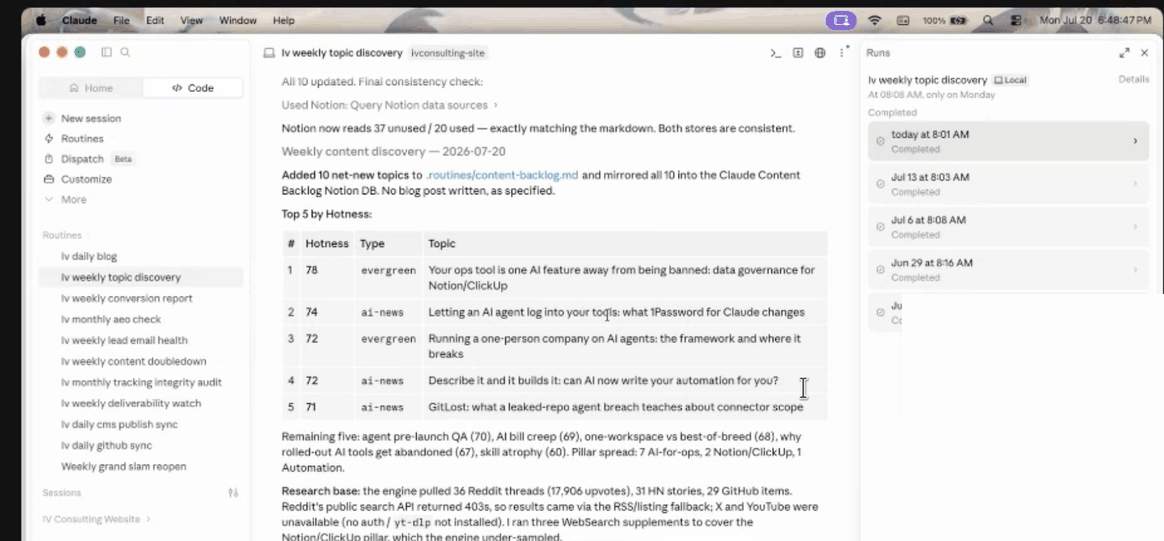
That is our own Cowork workspace: eleven routines on a schedule, a run history that has completed every morning, and an agent editing files in the repo. We teach your team to build exactly this, on your work.
The receipts
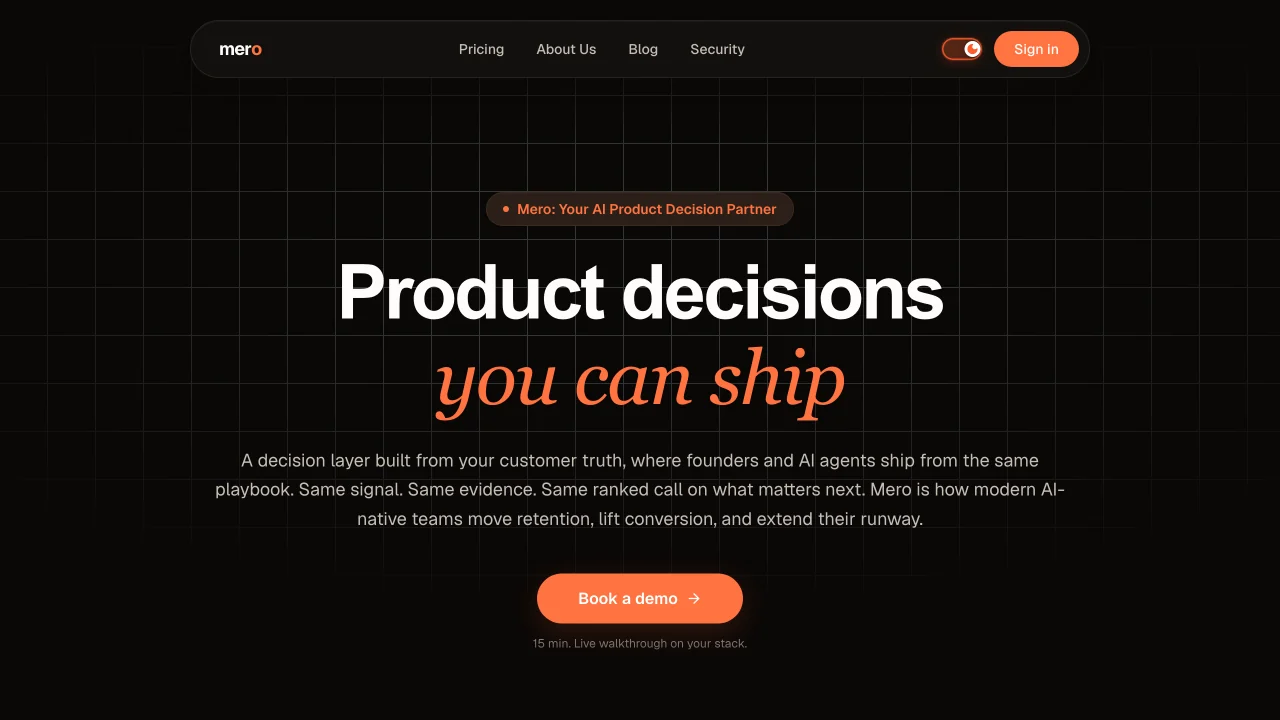
Built end to end with Claude: Mero AI.
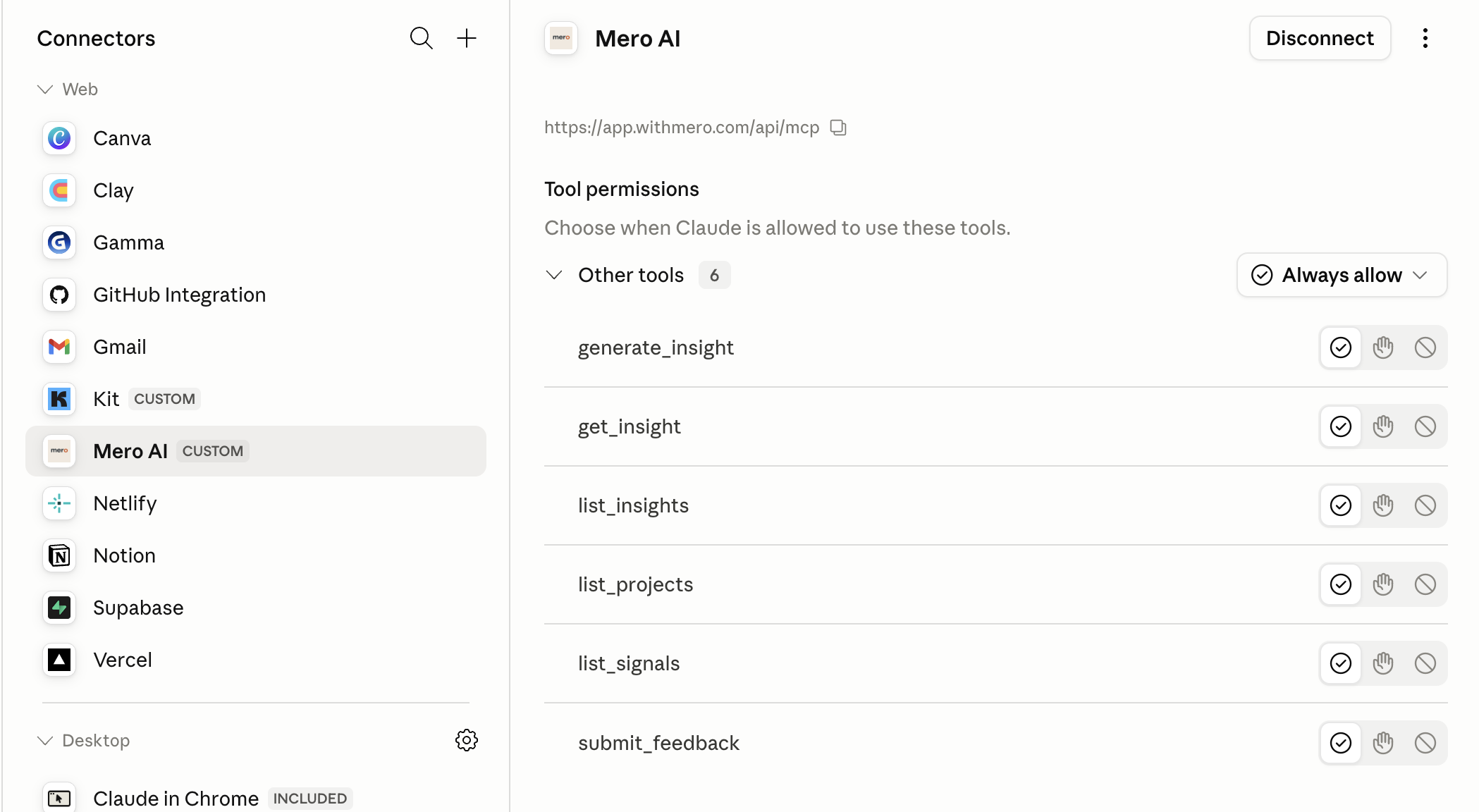
We have shipped a number of AI products. This is the one built entirely with Claude Code and Cowork, and the one running a production MCP server in the cloud, so Claude uses it directly as a tool rather than through a browser.
Case study · Product, API and MCP server
Mero AI
An AI product-decision partner, designed and shipped end to end: a full web app, native integrations, a documented REST API, developer docs, and an MCP server deployed to the cloud. The screenshot is Mero registered as a custom connector inside Claude, with its tools and per-tool permissions live. Built with Claude Code and Cowork throughout, from empty repo to production.
“Mero is our own product, so treat this as a builder's note rather than a client reference. I built it the way I would build yours: Claude Code from an empty repo, Cowork running the recurring work, a public REST API, and an MCP server in the cloud so Claude uses it as a tool instead of a website. Everything on this page is something I have actually shipped.”
How it works
Start with a consult. Own everything after.
01 · Consult
One call to start
We map where Claude belongs, design the architecture and tell you what to build first. You keep the plan either way.
02 · Build
Fixed scope, fixed quote
Scoped separately. We build inside your repos and your accounts, ship to production with monitoring, then hand you the keys.
03 · Handover
You own it outright
Docs, conventions and training, so your team can extend it without booking us again.
You own everything we build. Code, prompts, Skills, credentials and docs all live in your accounts. There is no platform of ours to stay subscribed to, and you can take it in-house tomorrow.
Access stays scoped and stays yours. The MCP server runs in your cloud on your credentials, and Claude gets tool-by-tool permissions you approve, so you decide exactly what it can read and what it can change.
What we charge
What does Claude consulting cost?
Two shapes. A scoped build, priced as a fixed project once we know what we are building. Or a retainer, when you want us owning the Claude architecture and training your team over months. We do not list prices because we have never quoted two of these the same. Scope drives the number, and scope takes one call to establish.
Model one
Scoped build
Priced as a fixed project once we know what we are building. One outcome, one number, agreed before anyone starts.
Best when you know the thing you want shipped
Model two
Retainer
We own the Claude architecture, review the builds and train your team over months. Senior judgment on tap without carrying the hire.
Best when you are shipping continuously
Rough scope ladder Smaller to larger
1
One MCP server, wired into your existing product
A single, well-scoped piece. A good first engagement if you want to see how we work before committing to more.
2
A production agent with monitoring and fallbacks
Something customers or staff touch daily, built to survive real traffic rather than a demo.
3
A full internal system plus a team rollout
Build and enablement together, so the system ships and your team can carry it forward.
If you are looking for a few hours of Claude help or a single prompt fixed, we are not the right fit and the call will waste your time. You will leave the first call with a range. Not a proposal, a range. Get a budget range on the call →
Who you are hiring
Senior engineers only. No junior bench.
Founder · Shipped with Claude · Ishan Vats
Claude Partner Network member. Builders and engineers who have delivered for 150+ teams, backed by three decades of combined engineering experience across enterprise AI.
Shipped with ClaudeAn AI product with a live MCP server, built end to end with Claude Code and Cowork, running in production today.
Owns the engagementScoping, architecture and handover. The person on your first call is the person who owns your build.
Results.
Every build is tied to one number that matters to you: revenue up, hours saved, or churn down. If it does not move that number, we do not ship it.
Reliability.
What we build runs in production without babysitting, tested against your real workflow and fully documented. It stays stable long after we have handed it over.
Relationships.
Most clients come back for the next build, because the first one worked and the people behind it were easy to reach. We stay reachable after handover, not just during the project.
Your Claude bill
Most Claude bills have levers on them nobody has pulled.
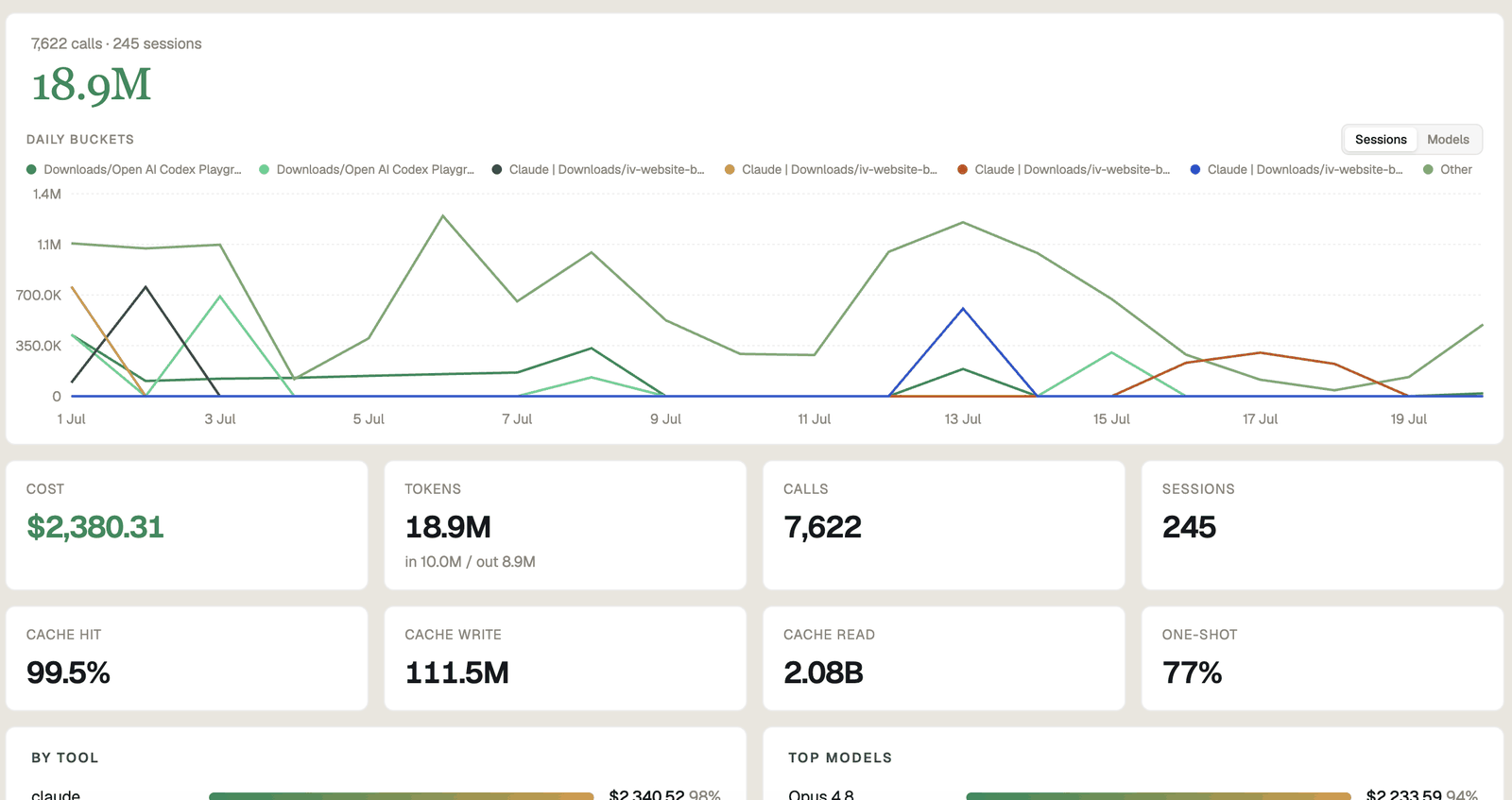
Teams ship the thing that works, traffic grows, and the invoice quietly becomes a problem nobody owns. We read where the tokens actually go, by project and by task, then fix the pattern causing it. These are Anthropic's published discounts, not our estimates, and most workloads qualify for more than one.
This is our own Claude usage, not a client's. We instrument our spend the same way we would instrument yours: cost and tokens by day, by tool and by model, so the expensive pattern is visible instead of theoretical. The number to look at is the cache hit rate. At 99.5 percent, with 2.08 billion tokens served from cache, almost none of that repeated context is being paid for at full price. That is the single lever most teams have never switched on.
0%
Prompt caching
Off cached input tokens when the same context repeats across calls. Long system prompts and document context are the obvious candidates, and almost nobody switches it on.
Anthropic published pricing
0%
Batch API
Off both input and output for anything that does not need an answer this second. Most reporting and enrichment work qualifies and nobody notices the delay.
Anthropic published pricing
Routing
Model routing
Send the easy majority of calls to a smaller model and reserve the frontier model for work that genuinely needs it. Usually the single biggest line-item win.
Architecture, not a discount
A spend audit is a fixed-scope piece of work. We read your usage, model the savings, and give you the changes ranked by what they return. If the audit does not identify at least its own fee in annualised savings, we refund it in full.Get your Claude spend audited →
Read first
The Claude playbook.
Everything we have written on putting Claude to work. Start here if you would rather read than book.













 MCP
MCP Notion
 CRM
CRM DB
DB