Claude Sonnet 5 for small business automations: 13% cheaper, not 33%
Claude Sonnet 5 is Anthropic's most agentic Sonnet yet, and it stays at $2 / $10 now that the planned rise to $3 / $15 has been cancelled. But a newer tokenizer bills the same text at about 30 percent more tokens, so we priced one real workload to find the true saving. Here is the number, our verdict, and when to reach for Haiku 4.5 or Opus 4.8 instead.
 By Ishan Vats · Claude Partner Network · builds AI agents & automations for 150+ teams
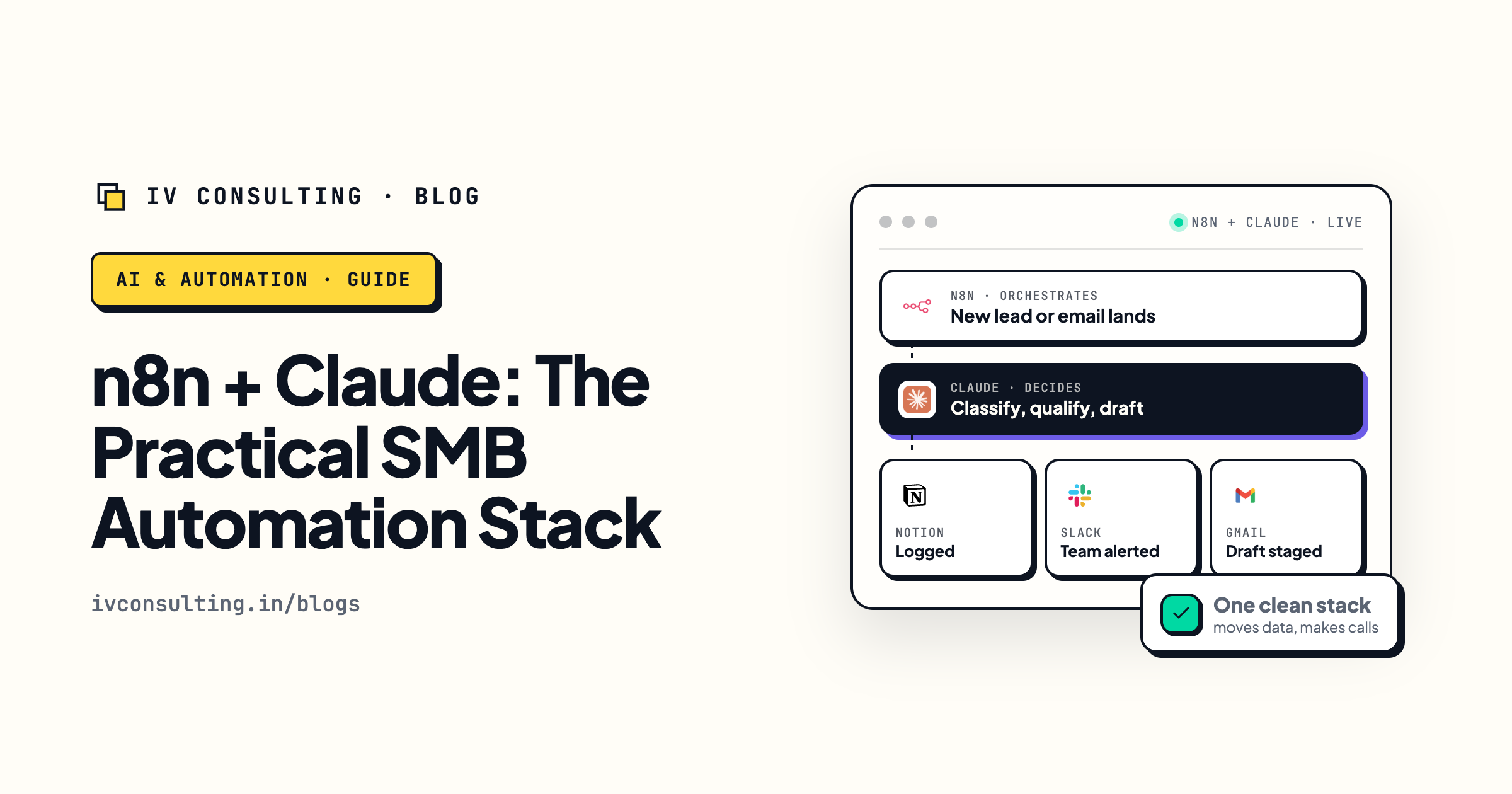
 n8n · OrchestratesNew lead or email lands
 Claude Sonnet 5 · DecidesClassify, qualify, draft
 NotionLogged
 SlackTeam alerted
 GmailDraft staged
Claude Sonnet 5, launched by Anthropic on June 30, 2026, is the most agentic Sonnet yet and costs $2 per million input tokens and $10 per million output tokens. That was billed as an introductory rate through August 31, 2026, but Anthropic has since made it the standard price and cancelled the planned rise to $3 and $15. The catch is the tokenizer: Sonnet 5 counts about 30 percent more tokens for the same text, so on a workload we priced, moving from Sonnet 4.6 saves about 13 percent, not the 33 percent the sticker implies. Our verdict: make Sonnet 5 the default for any step that uses tools or writes something a customer reads, put high-volume sorting and extraction on Haiku 4.5, and keep Opus 4.8 for rare, high-stakes calls.
The launch
What is Claude Sonnet 5?
Claude Sonnet 5 is Anthropic's mid-tier AI model, released on June 30, 2026, built to be the most agentic Sonnet yet. Anthropic says it can make plans, use tools like browsers and terminals, and run multi-step tasks autonomously at a level that, just a few months ago, required larger and more expensive models. It is now the default model for Free and Pro users of Claude, and it is also available to Max, Team, and Enterprise users and through the API, which is how it plugs into your automations.
The headline for anyone running automations is the price. Sonnet 5 costs $2 per million input tokens and $10 per million output tokens. Anthropic launched it calling that an introductory rate through August 31, 2026, with $3 and $15 to follow, and has since confirmed in its pricing documentation that $2 and $10 is now the standard price and the increase will not happen. That is less than half of Opus 4.8's $5 and $25, for performance that, on Anthropic's own benchmarks, lands close to Opus 4.8, and on one knowledge-work benchmark slightly ahead of it.
Why this matters to you and not just to developers: in almost every automation, the AI is one step in a larger workflow. That is the n8n plus Claude stack we build for clients, where n8n moves the data and Claude is the brain that reads, decides, and drafts. When the brain gets cheaper and more capable overnight, every workflow built on it gets cheaper and more capable too. If you are new to the idea, our plain guide to AI agents covers the basics.
The impact
Why does a cheaper, more agentic Sonnet matter for SMB automations?
Because in a real automation, the model is usually the variable cost and the capability ceiling at the same time. Cut its price and lift its skill, and both of those constraints move in your favor at once. Two things change for small business automations specifically.
Cheaper token pricing lowers the cost of the thinking step. Every time an automation reads an email, classifies a ticket, or drafts a reply, you pay for the tokens that step uses. At $2 per million input and $10 per million output, that cost per run is small. The practical effect is that automations you shelved as "not worth it at volume" often cross the line into worth building, because the AI step no longer dominates the bill.
More agentic means the model handles multi-step work itself. Anthropic built Sonnet 5 to plan, use tools, and run through several steps without a human nudging it along. Work that used to need either a pricier model or a pile of brittle hand-built steps can now sit in one cleaner Sonnet 5 step. Here is what that unlocks:
- The per-run cost of the reasoning step drops, so more of your volume becomes affordable to automate.
- Tasks that needed Opus now run on Sonnet, such as multi-step planning, tool use, and longer chains of reasoning.
- Borderline-ROI workflows become worth it, because the math that made them marginal just improved.
- Fewer brittle steps. A more capable model can absorb logic you used to stitch together by hand, which means less to maintain.
The choice
When should you use Sonnet 5 vs Opus 4.8?
Simple rule: make Sonnet 5 your default for any step that uses tools or writes something a person will read, drop to Haiku 4.5 for simple steps that run thousands of times a month, and escalate to Opus 4.8 only when a task genuinely needs the extra reasoning and the volume is low enough that price does not matter. For most everyday work inside SMB automations, Sonnet 5 is the right tool because it is cheaper than Opus and, on Anthropic's numbers, close to it anyway.
Reach for Claude Sonnet 5 for the bread-and-butter steps:
- Classifying and routing. Sort a support ticket by intent, tag a lead by industry, send an email to the right team.
- Extracting fields. Pull line items, totals, and due dates out of invoices, or name, company, and budget out of a free-text inquiry.
- Summarizing. Condense a long thread, transcript, or document into the few things someone actually needs.
- Drafting. Write the first version of a reply, follow-up, or status update in your voice, ready for a human to review.
- Routine tool use. The multi-step, agentic work Sonnet 5 was built for.
Reach for Opus 4.8 only when the task is rare and the stakes are high:
- The hardest judgment calls, where a subtle mistake is costly and you run the task infrequently.
- Deep research or long, layered reasoning that benefits from the flagship model.
- Low-volume, high-value decisions, where the price gap between the two is a rounding error.
Reach for Haiku 4.5 when a step is simple, repetitive, and runs thousands of times a month: tagging, yes or no routing, pulling a single field. At $1 and $5 per million tokens, and on the older tokenizer, it prices the workload in the next section at $27 against Sonnet 5's $70.20. Try it on 50 real inputs first. If it misroutes, the saving is not worth it.
If you are weighing Claude against other vendors rather than against itself, our base-and-multiplier price table across 11 models puts Haiku 4.5, Sonnet 5 and Opus 5 next to their GPT-5.6, Gemini and Kimi equivalents, re-checked in September 2026. For the OpenAI side on its own, our GPT-5.6 Luna vs Terra vs Sol pricing runs the same 10,000-run triage step on every GPT-5.6 and GPT-6 tier.
For a wider look at picking a model for ops work, see Claude vs ChatGPT for operations teams.
The real cost
How much does Claude Sonnet 5 really cost after the tokenizer change?
On a workload we priced, Claude Sonnet 5 costs about 13 percent less than Sonnet 4.6, not the 33 percent its price tag suggests. The per-token price did fall by a third, from $3 and $15 to $2 and $10. But Anthropic documents that Claude 4.7 and later models, Sonnet 5 included, use a newer tokenizer that produces approximately 30 percent more tokens for the same text, while Sonnet 4.6 and Haiku 4.5 use the older one. So the same email, ticket, or invoice bills more tokens on Sonnet 5 than it did on Sonnet 4.6, and a price per token only compares cleanly between models that count tokens the same way.
To see what that does to a real bill, we priced one typical automation step on each Claude tier using Anthropic's published rates. The step is a lead or ticket triage that runs 10,000 times a month, reading about 1,200 tokens and writing about 300 on the older tokenizer. That is 12 million input and 3 million output tokens a month, which on the newer tokenizer becomes roughly 15.6 million and 3.9 million.
| Model and rate (per M input / output) | Tokens billed a month | Monthly cost | vs Sonnet 4.6 |
|---|---|---|---|
| Claude Haiku 4.5 at $1 / $5 | 12M in, 3M out (older tokenizer) | $27.00 | 67% cheaper |
| Claude Sonnet 4.6 at $3 / $15 | 12M in, 3M out (older tokenizer) | $81.00 | Baseline |
| Claude Sonnet 5 on sticker price | 12M in, 3M out (what most budgets assume) | $54.00 | 33% cheaper, on paper |
| Claude Sonnet 5 after the tokenizer change | ~15.6M in, ~3.9M out | $70.20 | 13% cheaper, in practice |
| Claude Sonnet 5 via the Batch API at $1 / $5 | ~15.6M in, ~3.9M out | $35.10 | 57% cheaper |
| Claude Opus 4.8 at $5 / $25 | ~15.6M in, ~3.9M out | $175.50 | 2.2x the cost |
Two caveats keep this honest. The 30 percent is Anthropic's approximation, and it says the exact increase depends on the content and workload shape, so your real saving could land a few points either side of 13 percent. And these are list prices for the model calls only, not your automation platform's fee. The surest way to know your own number is to run a week of real traffic through Sonnet 5 and read the token counts off the API responses, rather than trusting any per-token comparison, including ours.
Three things in that table matter more than the headline price. The Batch API halves Sonnet 5's rates to $1 and $5, which saves more than the whole model upgrade for any step that does not need an answer in seconds, such as overnight enrichment or weekly reporting. Cache hits cost $0.20 per million input tokens, a tenth of the base rate, which pays off whenever every run repeats the same long instructions. And Haiku 4.5 handles the same volume for $27, because it is both cheaper per token and on the older tokenizer.
The numbers
Claude Sonnet 5 vs Sonnet 4.6 vs Opus 4.8
Benchmark scores below are the ones Anthropic reported at launch, and prices are from Anthropic's pricing page as of 11 September 2026. The pattern is clear: Sonnet 5 is a large jump over the previous Sonnet 4.6 and sits within reach of the flagship Opus 4.8, for less money.
| Measure | Claude Sonnet 5 | Sonnet 4.6 | Opus 4.8 |
|---|---|---|---|
| API price (per M input / output) | $2 / $10, now the standard price (the planned rise to $3 / $15 was cancelled) | $3 / $15 | $5 / $25 |
| Tokenizer | Newer, about 30% more tokens for the same text | Older | Newer, about 30% more tokens for the same text |
| SWE-bench Verified (coding) | 72.7% | 62.3% | 79.4% |
| Agentic coding benchmark | 63.2% | 58.1% | 69.2% |
| Terminal-bench (agentic tool use) | 76.1% | 55.4% | Not reported by Anthropic |
| Knowledge work | Edges out Opus 4.8 | Behind Sonnet 5 | Very strong |
| Agentic autonomy | Most agentic Sonnet yet | Previous generation | Flagship, top tier |
| Best fit for SMB ops | Default reasoning model | Superseded by Sonnet 5 | Escalate for hard calls |
In practice
Where does Sonnet 5 fit in your automation pipeline?
The stack does not change, the model inside it does. In each of these, n8n moves the data and Claude Sonnet 5 handles the one step that needs a brain, now at a lower cost per run. Four examples we build often for small teams.
Inbound lead triage
n8n catches every new form submission and inbound email, then logs it. Sonnet 5 reads the free-text inquiry, decides whether the lead is a fit, scores its urgency, and drafts a tailored first reply. n8n then files the lead in your CRM, alerts the owner in Slack, and stages the draft in Gmail for a quick human check. No inquiry sits unanswered overnight, and because the reasoning step is cheap, you can run it on every lead, not just some.
Support ticket sorting
n8n picks up each new ticket. Sonnet 5 classifies it by intent and urgency and suggests a reply. n8n routes it to the right person and updates the queue.
Invoice and data extraction
n8n grabs the incoming invoice or document. Sonnet 5 reads it and returns clean fields: vendor, line items, total, due date. n8n writes them straight into your sheet or accounting tool.
Content and reply drafting
n8n pulls the source material, a brief, a product record, a customer thread, on a trigger or schedule. Sonnet 5 drafts the email, description, or status update in your voice. n8n drops the draft into Notion or Gmail for a human to approve and send. You stop starting from a blank page.
The pattern
How do you put Sonnet 5 to work without getting burned?
Adopting a new model in your automations is a small, safe change if you do it in this order. Five steps, and none of them require a rebuild.
Make Sonnet 5 your default model
In your existing workflows, point the AI step at Claude Sonnet 5. If you were on the previous Sonnet, this is often a one-line change. If you were on Opus for cost reasons, you may be able to step down and save money.
Keep each AI step small and specific
Give the model one clear job per step: classify, extract, or draft. A tight, single-purpose prompt is cheaper, faster, and easier to trust than one giant instruction that tries to do everything.
Ask for structured output
Tell Sonnet 5 to return a small JSON object so the next step in your automation can use it cleanly, with no guesswork.
Escalate to Opus 4.8 only for the hard calls
Add a branch that routes the rare, high-stakes case to Opus 4.8, and let everything else run on Sonnet 5. Most workflows never trigger the branch, but it is there when a task genuinely needs the flagship.
Verify: cheaper does not mean hands-off
Stage drafts instead of auto-sending, and keep a human in the loop for anything customer-facing or hard to reverse, at least until you have watched it make good calls for a few weeks. A better, cheaper model still needs the same guardrails. Our take on when not to use AI in your automations still holds.
FAQ
Questions people ask about Claude Sonnet 5
What is Claude Sonnet 5?
How much does Claude Sonnet 5 cost?
Did Claude Sonnet 5 go up to $3 and $15 after August 31, 2026?
Is Claude Sonnet 5 good enough for business automations, or do I need Opus 4.8?
Can I use Claude Sonnet 5 inside n8n, Make, or Zapier?
Is Claude Sonnet 5 safe to run in automated workflows?
Ishan Vats
Founder, IV Consulting · Claude Partner Network
I build production AI agents, automations, and MCP servers for teams from startup to enterprise. 150+ ops transformations over 10+ years.
See how we build these →Keep reading
Related guides and work
n8n + Claude: the practical SMB automation stack
The stack Sonnet 5 slots into: n8n for orchestration, Claude for judgment. When to use each.
Read the guide →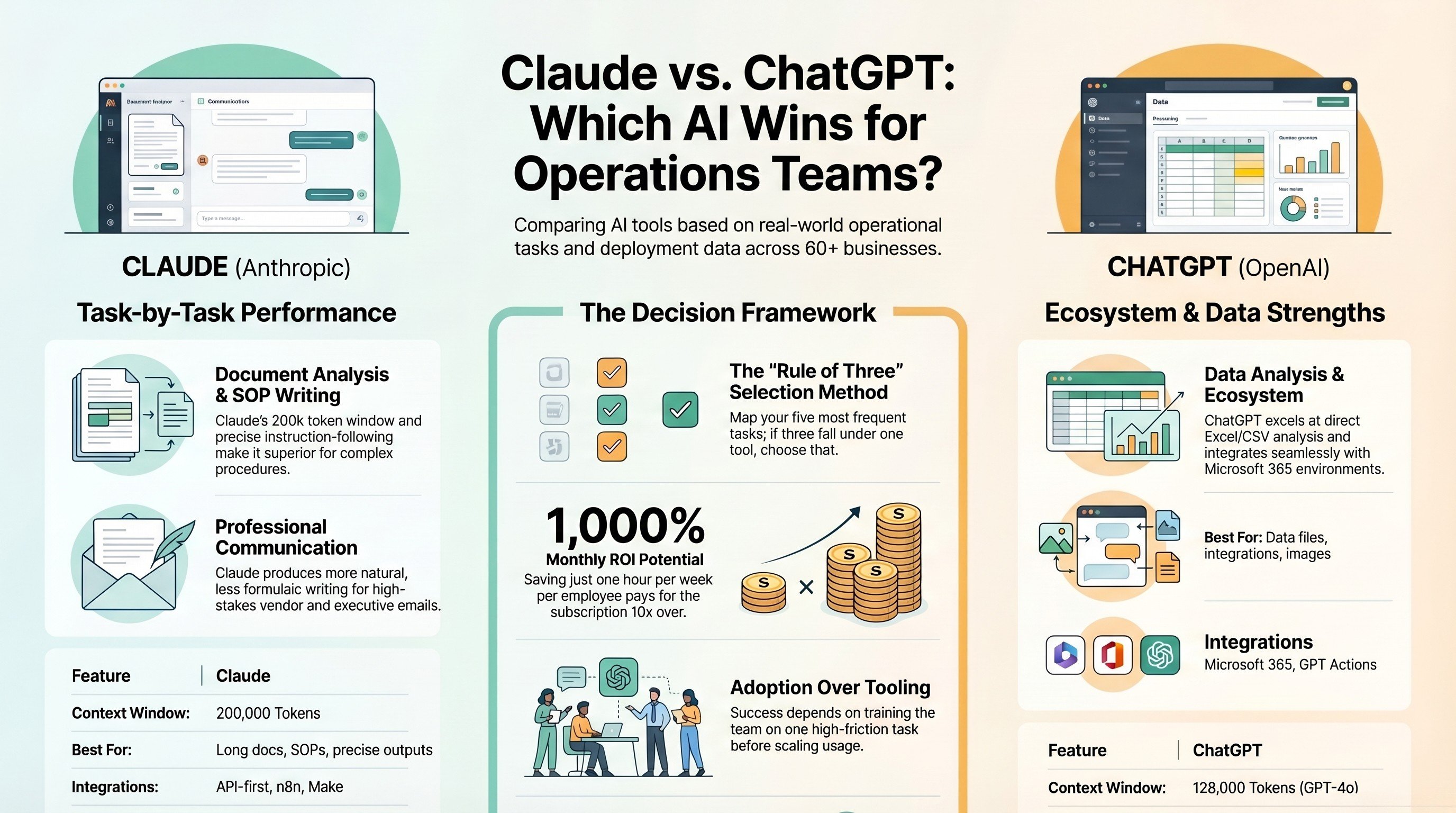
Claude vs ChatGPT for operations teams
Which model to plug into your stack, and where each one pulls ahead for ops work.
Read the comparison →
The Automation stage, built for you
See what this looks like at full scale: your tools connected, the busywork gone.
See the offer →Want Sonnet 5 wired into your automations?
Book a free 30-minute strategy call. We will map your highest-ROI workflows, show you where Sonnet 5 fits, and give you a build roadmap on the spot. If we are not the right team for you, we will say so and point you somewhere better.
Book a Free Strategy Call →Free 30-minute call. Honest take, even if that means "you do not need us yet."