 AI & Automation · Decision Guide
Are AI agents worth it? Five Reddit threads, one verdict
Our call: default to an automation, and promote to an agent only when a fixed workflow genuinely cannot do the job. Here is the reasoning, and the five cited r/AI_Agents threads that back it.
 By Ishan Vats · Founder of IV Consulting · builds AI agents & automations for 150+ teams
Reddit · The boomSpend doubles in 2026
 The one questionIs this really an agent job?
 AutomationA workflow wins
An AI agent is worth it only when the task needs judgment or language that a fixed sequence of steps cannot encode. For most small business jobs it does not, which is why the honest answer is to default to a rules-based automation and promote to an agent only when forced. That is also the consensus among the people actually shipping agents on r/AI_Agents: not "agents are fake," but "most of what people call an agent should have been a simple automation." Scope tight, cap the spend, and reserve the agent for the few jobs that earn it.
The verdict
Are AI agents worth it for a small business?
For most jobs, no, and that is a recommendation rather than a dismissal. Build the rules-based automation first. Promote it to an agent only when the task genuinely needs judgment or language that a fixed sequence cannot encode. That is the call we make when a client asks us to build an agent, and it is the same call the builders on r/AI_Agents keep arriving at independently.
Here is the reasoning, because a verdict without one is just an opinion:
- The default should be an automation, and it is not close. Predictable steps, a rule or filter instead of a decision, a loud and obvious failure when something breaks. Cheaper to run, easier to debug, and you find out the same day when it goes wrong. Most of what gets briefed to us as "an AI agent" is this.
- An agent earns its cost on judgment, not on volume. Classifying a vague email, drafting a reply a human would send, deciding which of several paths to take on messy input. If you cannot name the specific judgment call the model is making, you are paying model prices for something an if-statement does better.
- The failure mode is what actually decides it. An automation crashes loudly. An agent can retry a bad call all night and bill you for it, which is the single most repeated warning in the threads below. That asymmetry is why the burden of proof sits on the agent, not on the automation.
The honest counter case: this rule can talk you out of something worth building. When a job is genuinely judgment-heavy and high-volume, the narrow well-scoped agent is a real edge, and the operators quietly winning with agents are doing exactly that rather than waiting for certainty. Our own five-day scorecard in the Manus AI review is the concrete version of that: research and report deliverables paid back immediately, and the two writing tasks did not. If the judgment is the whole job, build the agent and put the guardrails on from day one.
One thing the build choice will not fix: the gap between teams that get value out of this and teams that do not is almost never the tooling. It is whether anyone scoped the job before the spend started.
The headline number
Why is everyone suddenly spending on AI agents?
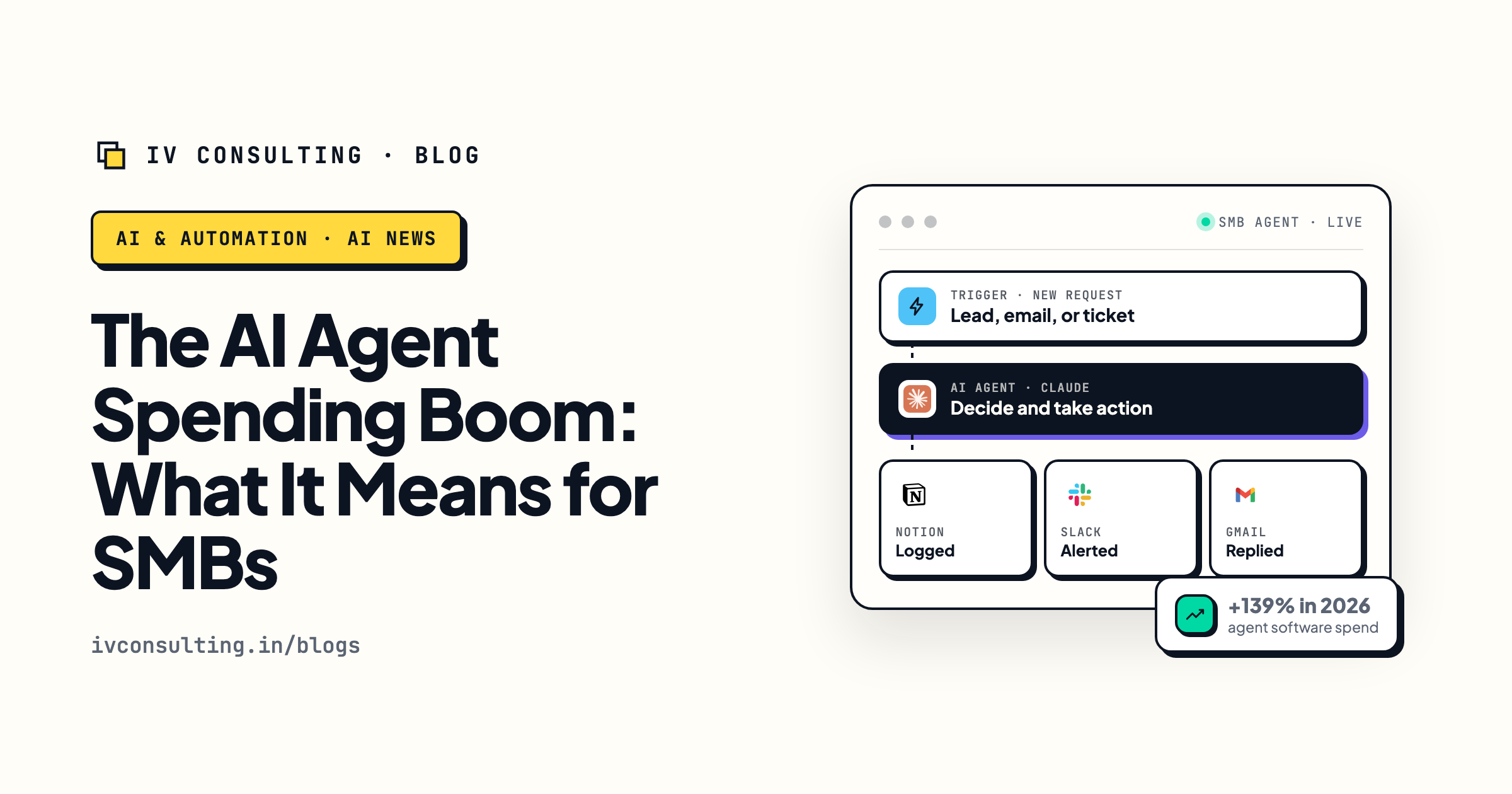
The pressure to build an agent is not imaginary, and it is worth understanding before you answer the question above. Gartner forecasts that AI agent software spend roughly doubles from about 86 billion dollars in 2025 to about 206 billion in 2026, a 139 percent jump, as companies shift budget from chatbots that answer questions to agents that do work. That is not a chatbot upgrade. It is companies betting real budget on software that takes actions on its own. So the money is real, and it is moving fast.
We covered the market side of this in detail in our companion piece, AI agents for small business: rent, do not buy. That post is the forecast. This one is the reality check from the people in the trenches. If it is the price tag you are weighing rather than the forecast, we broke that down separately in what an AI agent actually costs.
When the budgets explode but the builders get quieter and more careful, that gap is worth reading closely. It usually tells you where the wasted spend is about to land.
The community read
What does Reddit actually think about AI agents?
If you only read the headlines, you would expect r/AI_Agents to be a wall of hype. It is not. The dominant mood across its highest-engagement threads is best described as pro-precision skepticism: not "agents are fake," but "most of what people call an agent should have been a simple automation, and a lot of the spend is going to waste."
One of the clearest examples is a thread titled "Am I antiquated, or do a lot of the ways people use AI agents make no sense?" (74 upvotes). The fact that a question that doubts the whole category climbs to the top of an agent-building subreddit tells you where the room actually sits. The builders are not anti-agent. They are anti-waste.
This matters for anyone about to write a cheque. The people who have shipped agents in production are converging on a few hard-won rules. Below are the five threads that capture the mood best, and what each one teaches you before you spend.
The receipts
Five Reddit threads that capture the real mood
Five real, high-engagement posts from r/AI_Agents, linked so you can read them yourself. Read them as a single message: spend on judgment, not on theatre.
"What's the most an AI agent has ever quietly cost you?"
The original poster's agent got a bad response from a tool, decided to retry, and kept retrying all night. In their words: agents "fail quietly, by spending your money while you sleep... a slow drip that had turned into £220 by the time I caught it." The scariest agent failures are the silent ones.
268 upvotes"I charge clients more to NOT build an AI agent"
A consultant's most upvoted move is steering clients away from agents they do not need. The market is starting to reward restraint, not just builds.
r/AI_Agents"$100k+ building AI automations: what's worth it and what's a waste"
"I spent three weeks building an agent for a client when a 200 dollar per month workflow would have done the job." The line between automation and agent is where the money leaks.
74 upvotes"Do a lot of the ways people use AI agents make no sense?"
A doubt-the-category question rising to the top of an agent subreddit. The builders themselves are asking which use cases are real and which are just demos dressed up as products.
r/AI_Agents"The 3 verticals where AI agents are quietly printing money for solo operators"
The optimism is still there, but it is specific. When agents pay off, it is in narrow, well-scoped jobs for a clear operator, not sprawling do-everything assistants.
The decision
When is an AI agent worth it, and when does an automation win?
This is the single distinction Reddit keeps coming back to, and it is the one that decides whether your AI agent spending pays back. An automation follows fixed steps. An agent has a language model deciding what to do next. Most jobs only need the first.
| The job in front of you | Reach for an automation | Reach for an agent |
|---|---|---|
| The steps | Predictable and repeatable | Change based on messy, unpredictable input |
| The decision | A simple rule or filter handles it | Needs real judgment or language |
| Example | New form to Notion, alert to Slack | Classify a vague email and draft a reply |
| Typical cost | A flat workflow fee, often ~$200/mo | Per-token model spend that scales with use |
| Failure mode | Loud and obvious, easy to catch | Quiet retries that burn spend overnight |
| Reddit's verdict | The default for most SMB jobs | Reserve it for the few jobs that earn it |
| Time to first result | Days, and it behaves the same on day 90 | Longer, because it needs testing against messy real input |
| Our call | Build this first. Assume it is the answer until the job proves otherwise. | Promote to this only when you can name the judgment call the model is making. |
If a fixed sequence can do the job, a rules-based automation in n8n, Make, or Zapier is cheaper, more reliable, and far easier to debug. The moment the task needs to read intent, weigh options, or write something a human would, that is when an agent earns its keep. Get this one call right and most of the "AI agents waste money" complaints disappear. For the full plain-English version of where agents pay off, see what is an AI agent: a guide for business owners.
The hidden risk
Why do AI agents run up costs without you noticing?
The most repeated warning is not that agents fail. It is how they fail. A traditional script crashes and you know instantly. An agent can keep going, retrying a bad call over and over, quietly running up model spend with nothing in the logs screaming at you. That is the £220-overnight story from the thread above, and variations of it show up constantly.
The scariest thing about agents in production isn't that they fail loudly. It's that they fail quietly, by spending your money while you sleep. r/AI_Agents, "What's the most an AI agent has ever quietly cost you?"
This is also why Gartner expects more than 40 percent of agentic AI projects to be canceled by the end of 2027, citing escalating costs, unclear business value and inadequate risk controls. The technology works. The spend control and guardrails often do not. An agent without a hard budget limit, a retry cap, and a kill switch is a bill waiting to happen. Scoping and guardrails are exactly the discipline our AI Engineering stage builds in from day one, and the broader playbook lives in AI agent governance and guardrails for SMBs.
The playbook
How to spend on AI agents without wasting it
The good news inside the skepticism: the builders who are winning have a repeatable approach. Here is the IV Consulting version, built from the same hard lessons Reddit is sharing.
Rent the leverage, do not rebuild it
You do not need a custom agent framework. Run agents on a proven stack: n8n for orchestration and Claude for judgment. You get production-grade plumbing for the price of a subscription, and you skip the most expensive mistakes.
Scope one or two high-ROI jobs first
Do not agent-ify your whole business. Pick the one or two tasks where judgment genuinely beats rules and the payback is obvious. Prove it pays, then expand. This is exactly how the "solo operators quietly printing money" thread describes the wins.
Default to an automation; promote to an agent only when forced
For every idea, ask: could a fixed workflow do this? If yes, build that. Reserve the language model for the part that actually needs to think. Most of your "AI agent spending" should quietly turn out to be cheaper automation spend.
Cap the cost and keep a human in the loop
Hard budget limits, retry caps, full logging, and a human checkpoint on anything irreversible. Guardrails are not bureaucracy. They are the difference between an agent that saves hours and one that bills you overnight.
FAQ
Questions people ask about AI agent spending
Is the AI agent spending boom real?
What does Reddit actually think about AI agents?
When should I use an AI agent instead of a normal automation?
Why do people on Reddit say AI agents waste money?
How do I spend on AI agents without wasting it?
What is the difference between an AI agent and an automation?
Do most AI agent projects fail?
Ishan Vats
Founder, IV Consulting · AI & automation consultant
I build production AI agents, automations, and MCP servers for teams from startup to enterprise. 150+ ops transformations over 10+ years. If you want this mapped to your own stack, I'll do it with you on a free call.
Run my AI agent ROI numbers →Keep reading
Related guides and work
AI agent spending is booming: what it means for small businesses
The market forecast behind this digest, and what it means for SMB owners.
Read the forecast →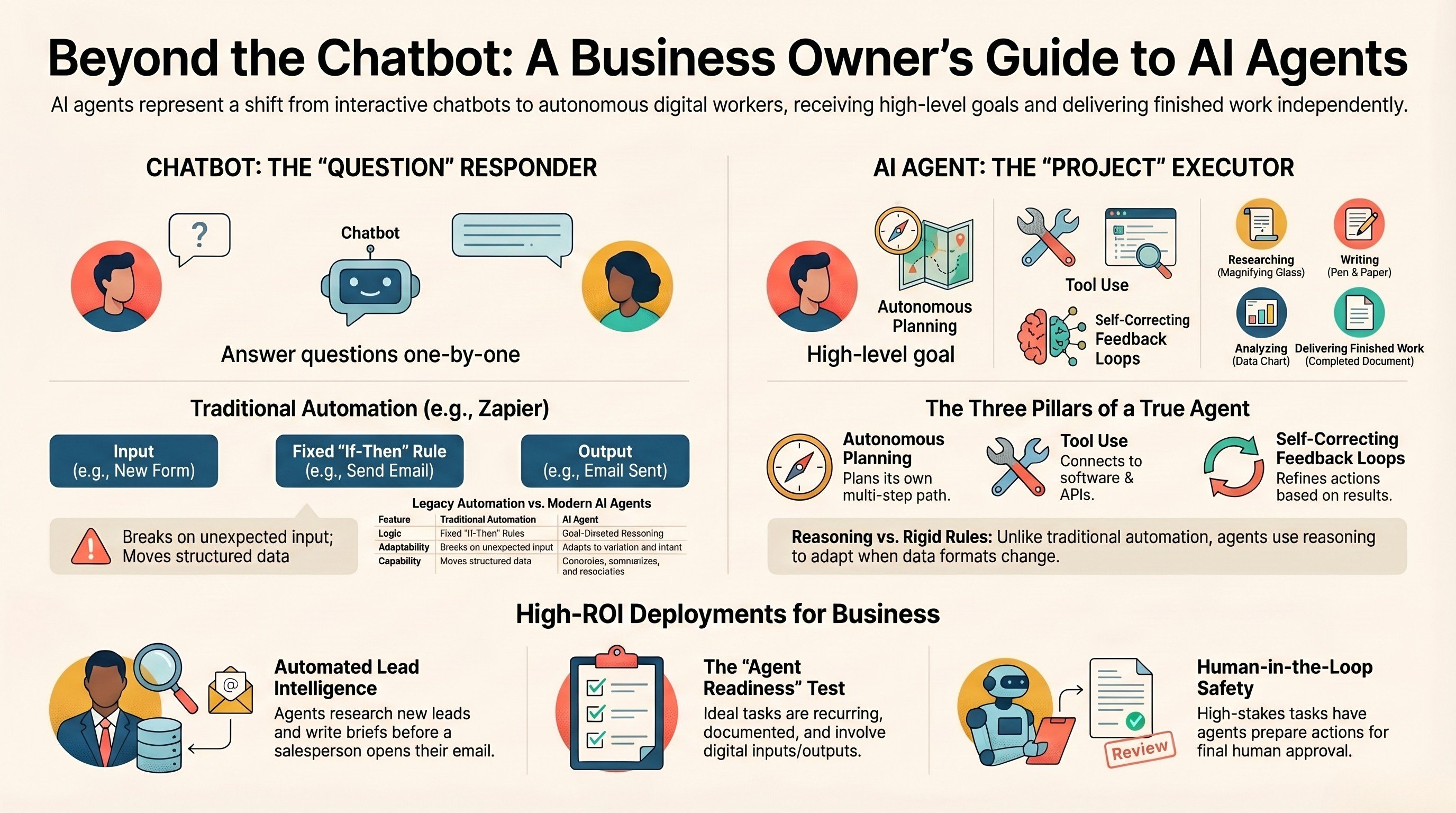
What is an AI agent? A guide for business owners
The plain-English version of what an agent actually is, and where it pays off.
Read the guide →
What AI Agents Actually Do (And Where Businesses Keep Getting Them Wrong)
A companion take on the same agent-vs-automation call, over on Digital Magazines.
Read on Digital Magazines →Want to spend on the right agent, not every agent?
Book a free 30-minute strategy call. We will map your highest-ROI use cases, tell you where an automation beats an agent, and give you a build roadmap on the spot. If you do not need an agent yet, we will say so.
Book a Free Strategy Call →Free 30-minute call. Honest take, even if that means "you do not need us yet."