Most buying signals are noise. Eight are worth acting on, and every one has a half life
A signal is only worth a send while it is still true. This is the list we actually watch, how each one is detected, and how fast each one decays.
 By Ishan Vats · Founder of IV Consulting · builds signal based outbound systems
The buying signals worth acting on are the ones you can write a specific first line from, and there are far fewer of them than most teams think. Eight hold up in practice: a decision maker changing role, a funding round, a fund closing a new vehicle, hiring for the function you serve, a tech stack change, repeat visits to your pricing or docs, a former champion landing somewhere new, and a leadership departure in the team you sell to. What separates these from the hundred other things you could track is not accuracy. It is half life. A pricing page visit is worth acting on for roughly seventy two hours. A funding round is worth acting on for a quarter. Track a signal without knowing how fast it decays and you will send into a window that has already closed, which is the most common reason signal led outbound underperforms the pitch.
The list
Which buying signals are actually worth acting on?
Every row here passes one test: you can write a first line from it that could only be sent to that account, this week. Anything you can only reference in passing did not make the list.
| Signal | Why it converts | How it is detected | Half life we work to |
|---|---|---|---|
| Decision maker changes role | New owner, new priorities, and a budget that resets with them. | LinkedIn and enrichment provider change feeds | About 90 days, strongest in the first 30 |
| Funding round announced | New capital means a spending plan being written rather than executed. | Funding databases and news feeds via API | One quarter |
| A fund closes a new vehicle | The money is new and the thesis is public before deployment starts. | Regulatory filings and fund announcements | One quarter, strongest in the first three weeks |
| Hiring for the function you serve | An open role is a public admission of the gap your product fills. | Careers pages and job boards, scraped where there is no API | While the role is open |
| Tech stack change | A tool added or dropped next to yours changes what is possible and what hurts. | Technographic lookups and site fingerprinting | About 30 days |
| Repeat visits to pricing or docs | Somebody is evaluating you right now, without telling you. | Your own analytics and de-anonymisation, wired to the pipeline | About 72 hours |
| Former champion in a new role | Someone who already bought from you, now holding a different budget. | Your CRM matched against change feeds | About 90 days |
| Leadership departure in the function | The team reassesses vendors while the seat is empty, not after it is filled. | Change feeds plus press | About 60 days |
The mechanics
What is signal half life, and why does it decide your cadence?
Half life is how long a signal stays true enough to be worth writing about. It is the difference between a message that reads as attentive and the same message, three weeks later, reading as automated.
Most teams treat detection as the hard part and then send on a weekly schedule that has nothing to do with the signal they detected. That is backwards. Detection is largely a solved problem you can buy. Cadence is the part you have to decide, and the decay rate is what should decide it.
Fast decay signals need a daily run
A repeat visit to your pricing page is worth about seventy two hours. Somebody is comparing you against two other options in a tab right now. Detect that on Monday, send on Friday, and you are writing to a decision that has already been made. Anything with a window measured in hours or days has to run daily, which means it has to run without a person remembering to run it.
Slow decay signals can run weekly
A decision maker who changed role three weeks ago is still new. Their budget is still forming. A weekly batch is fine, and a daily one wastes sending capacity you would rather spend on the fast signals. Splitting your cadence by decay rate is usually the single cheapest improvement available, because it costs nothing except deciding to do it.
The cut list
What looks like a buying signal but is not one?
The first thing we do on a build is cut the signal list, not extend it. Six triggers you can write a specific opening line from will beat sixty you can only mention.
Company size and industry
That is targeting, not timing. It tells you who to contact and says nothing about when. Useful in a filter, useless as a trigger.
A generic content download
Somebody wanted a PDF. Treating that as intent is how a prospect gets a five email sequence for reading one page, and how your domain earns a reputation you cannot undo quickly.
A LinkedIn post like
You cannot write a first line from it that does not sound like surveillance. If referencing the signal makes the recipient uncomfortable, it is not a signal, it is a trace.
Anything already in every sequence
If three competitors detect the same trigger from the same vendor and send in the same week, you have bought a crowd, not an advantage.
There is one test that settles almost all of these. Write the opening sentence the signal would produce. If that sentence could be sent to any other account on your list without changing a word, the signal is not doing any work and you are paying for it twice: once to the data vendor and once in reputation.
Worked example
What does one signal look like end to end?
Take the third row of the table, a fund closing a new vehicle, because it is a signal almost nobody writes into and the timing is unusually clean.
Venture funds announce new vehicles in public, in regulatory filings and in the press. Between that announcement and the fund actively writing cheques there is a short window when the capital is new, the thesis is stated, and the partner covering your sector has a mandate they have not spent yet. Write in that window and the message is obvious. Write a quarter later and the allocation is already committed.
We ran exactly this for a founder raising capital. The signal was watched on a schedule so a close was picked up in days rather than found later by accident. Each one was enriched to the individual partner covering that sector and stage, not a general inbox. The first touch went out while the money was new.
The lesson is not that fund closes are a magic trigger. It is that one signal with a known window, detected on a schedule and enriched to a named person, outperforms a long list of signals nobody has assigned a cadence to. That is the whole argument of building outbound as a system rather than as a campaign.
The plumbing
How do you detect buying signals without buying eight tools?
Three sources cover everything in the table, and most teams already pay for one of them.
1. Providers with an API
Job changes, funding rounds and technographics are sold by data vendors and arrive clean. Pull them on a schedule into one table rather than reading them in a vendor dashboard, because a signal you have to log in to see is a signal you will act on late.
2. Scraping, for the things nobody sells
Careers pages, directories, filings and listings are public and usually have no API. This is where a scraper earns its place, and it is often the source of the signals your competitors do not have, precisely because they are not for sale.
3. Your own first party data
Repeat visits to pricing and docs, and your CRM's history of people who already bought from you, are the two highest intent sources on the list and you already own both. The work is wiring them into the same pipeline as everything else instead of leaving them in an analytics tab. If your CRM is not built to receive that, start with the CRM: we cover what that setup involves in GTM and CRM setup, and the glue between tools you already pay for in automation.
FAQ
Questions people ask about buying signals
What is a buying signal in B2B sales?+
How many buying signals should we track?+
What is signal half life?+
Do buying signals actually improve results?+
Can we track buying signals without a data vendor?+
What is the first thing to fix if our outbound is underperforming?+
Ishan Vats
Founder, IV Consulting · AI & automation consultant
I build the GTM and AI systems teams run on, from signal detection through to CRM writeback. 150+ engagements over 10+ years. Every half life in the table above comes from running these systems, not from a vendor deck.
See how we build it →Keep reading
Related guides and work
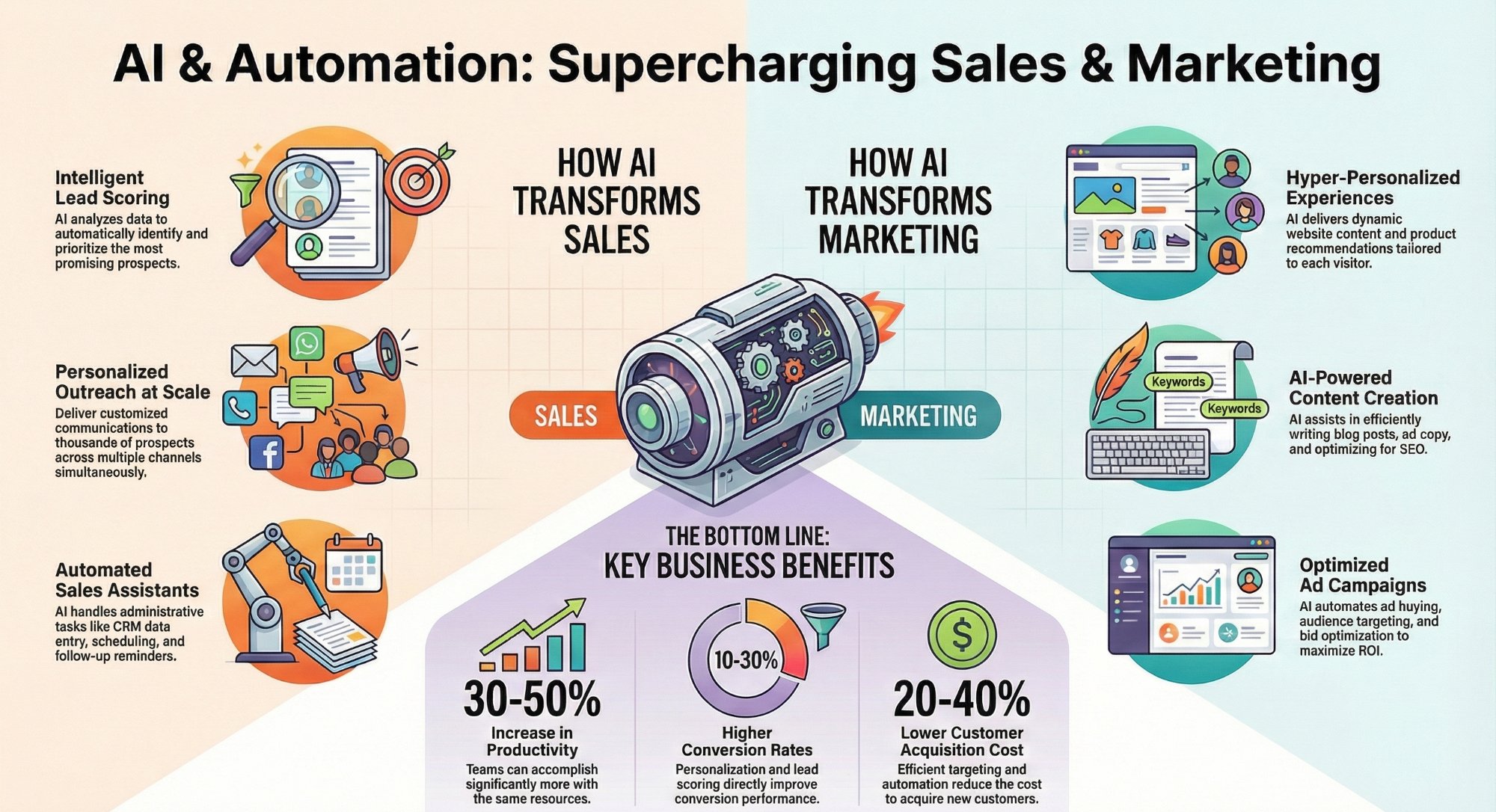
AI and automation for sales and marketing teams
Where the automation actually pays back once the signals are landing.
Read the guide →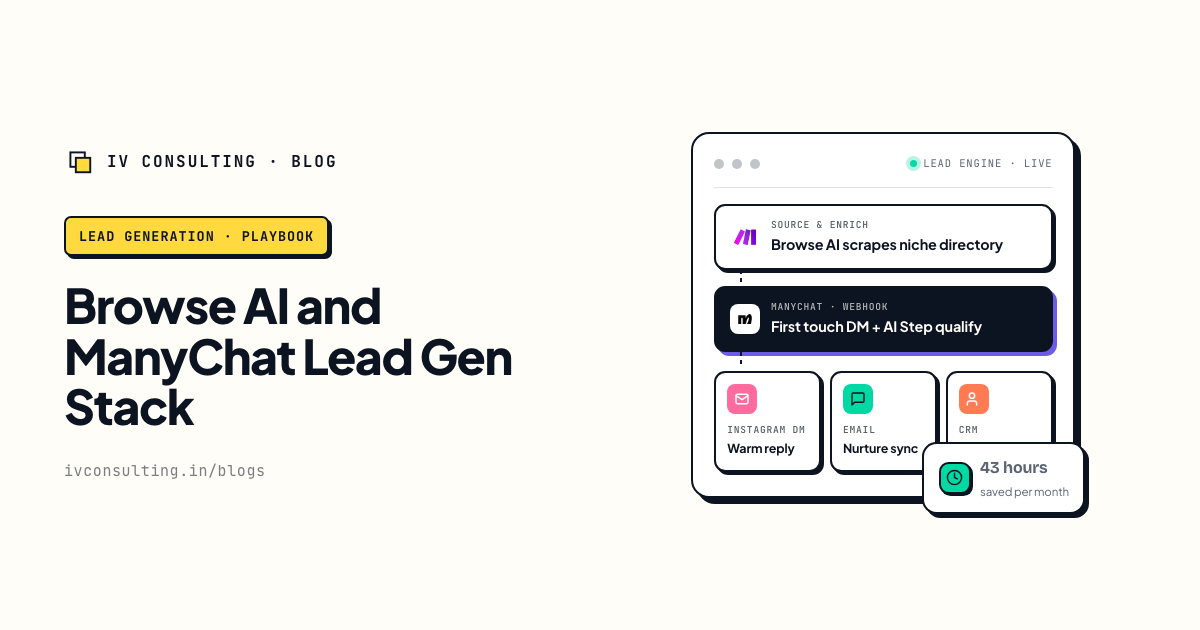
Scraping the signals nobody sells you
The build for the sources that have no API and never will.
See the stack →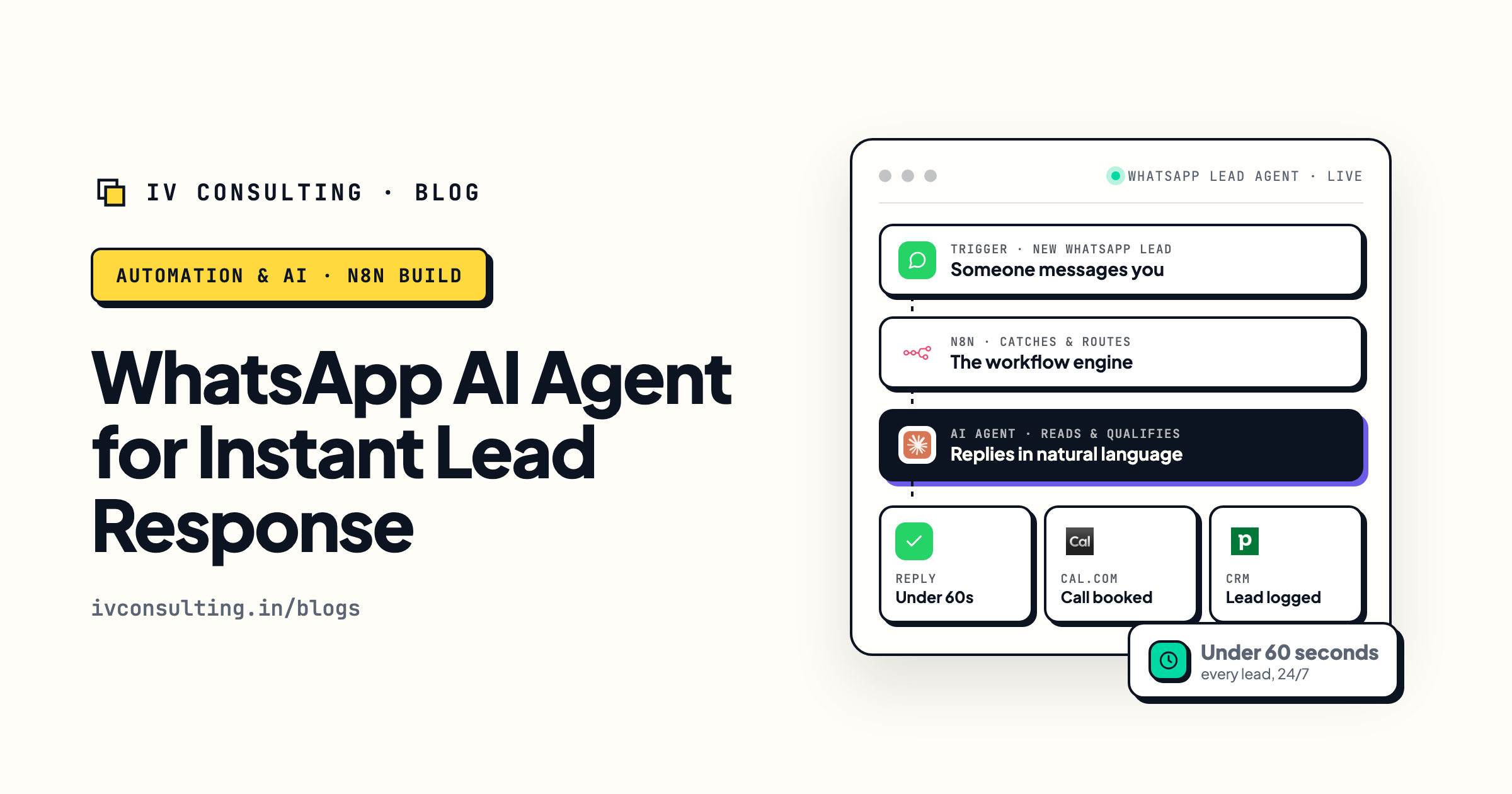
Answering a fast signal in minutes, not days
What it takes to respond while the window is still open.
Read the build →Want to know which signals you are already missing?
Book a free 30 minute call. We will look at who you sell to, name the signals firing on those accounts that nobody at your company is watching, and tell you what the window is on each one. If the honest answer is that your market does not produce enough signal to build on, we will say that instead.
Book a Free Strategy Call →Free 30 minute call. You leave with the signal list either way.