AI and automation use cases for data and insights teams
Ten ways modern data teams cut the manual grind, ship insights faster, and turn reporting into real strategy.
 By Ishan Vats · Founder of IV Consulting · builds AI agents & automations for 150+ teams
Some links below are affiliate links. If you buy through them we may earn a commission, at no extra cost to you.
 IngestConnectors pull every source
 Warehouse · AI layerClean, model, forecast
 AirtableRecords synced
 n8nReports routed
AI and automation let data and insights teams hand off the repetitive work: data collection, cleaning, reporting, dashboards, and monitoring all run automatically, while machine learning adds forecasting, anomaly detection, and segmentation. The result is 60 to 80 percent less manual processing and insights that land 30 to 40 percent faster, so analysts move from building reports to driving decisions.
The pressure
Why data and insights teams need AI now
In a data-driven business, insights teams are under constant pressure to deliver faster, more accurate analysis while data volumes grow exponentially. AI and automation have become the lever that lets these teams unlock deeper insights, streamline workflows, and support strategic decisions at a speed manual work cannot match.
At IV Consulting we have seen the shift firsthand: AI and automation turn data and insights teams from reactive reporting units into proactive strategic partners. The challenges are familiar:
- Data overload. The average organisation generates terabytes of data daily from many sources.
- Manual bottlenecks. Traditional cleaning, preparation, and analysis consume 60 to 80 percent of an analyst's time.
- Demand for real-time insight. Stakeholders expect instant access to actionable intelligence.
- Talent shortage. The gap between analyst demand and supply keeps widening.
- Complex analysis. Predictive and prescriptive analytics need sophisticated modelling.
AI and automation address all of these by augmenting human capability, automating the repetitive tasks, and freeing the team to focus on high-value strategic analysis.
The playbook
10 AI and automation use cases for data teams
Each of these is in production somewhere right now. Pick the two or three that map to your biggest time sinks and start there.
1. Automated data collection and integration
Intelligent connectors and APIs extract, transform, and load data from every source into a central warehouse or lake. Automation platforms like Make and n8n orchestrate the moving parts so syncs run on their own. This cuts data collection time by 70 to 90 percent, minimises transfer errors, enables near real-time synchronisation, and maintains data lineage automatically. One retail client integrated their e-commerce platform, POS, and inventory systems and dropped weekly data prep from 16 hours to 2.
2. Intelligent data cleaning and quality management
Machine learning detects and corrects inconsistencies, duplicates, missing values, and anomalies based on learned patterns and business rules. It improves data accuracy past 95 percent, flags quality issues automatically, learns from corrections over time, and standardises formats across sources. A financial services company used AI-powered quality tools to clean customer records, cutting duplicates by 85 percent and sharpening campaign targeting.
3. Automated report generation and distribution
Reporting tools generate, format, and distribute reports on a schedule or trigger, with AI-written narratives explaining the key findings. This eliminates around 80 percent of routine reporting work, keeps standards consistent, delivers insight instantly, and adds plain-language summaries of complex data. A manufacturing client automated daily production reports and freed up 15 analyst hours a week for strategic analysis.
4. Predictive analytics and forecasting
Machine learning models read historical data, find patterns, and forecast across many variables and external factors. Forecast accuracy improves by 20 to 50 percent, thousands of variables are processed at once, models adapt to changing conditions in real time, and you get confidence intervals and scenario analysis. An e-commerce business used AI demand forecasting to cut inventory costs by 25 percent while improving availability.
5. Anomaly detection and alerting
AI continuously monitors data streams, detects deviations from historical patterns, and triggers automated alerts when something significant shifts. It surfaces issues before they hit the business, reduces false positives through learning, enables proactive responses, and watches thousands of metrics at once. A SaaS company caught unusual user behaviour 75 percent faster than manual monitoring, flagging security threats early.
6. Natural language processing for unstructured data
NLP analyses text to extract sentiment, topics, entities, and trends from emails, social media, and reviews. Pair it with web data collection tools like Apify or Browse AI to gather the source text at scale, then let NLP read it. It analyses thousands of documents in minutes, surfaces sentiment and emerging trends, and routes information automatically. A hospitality brand analysed 50,000+ reviews and identified service fixes that lifted satisfaction scores by 18 percent.
7. Automated dashboard creation and maintenance
AI-powered BI tools suggest relevant visualisations, build dashboards from plain-language questions, and update metrics in real time. Dashboard development time drops by 60 percent, data access is democratised, the dashboards adapt to changing data structures, and the tool recommends the right chart for each data type. A healthcare organisation let non-technical staff build their own reports, cutting data-team requests by 40 percent.
8. Customer segmentation and personalisation
Machine learning reads customer data across many dimensions to create dynamic, granular segments and personalised recommendations. It builds hundreds of micro-segments automatically, finds hidden behaviour patterns, powers hyper-personalised marketing, and updates segments continuously. An online retailer built 200+ dynamic customer groups and lifted conversion rates by 35 percent.
9. Automated A/B testing and experimentation
Experimentation platforms design tests, allocate traffic, monitor performance, and call winners on statistical confidence. You can run 10x more experiments at once, calculate significance automatically, optimise test duration and sample size, and get actionable recommendations on their own. A digital media company raised experimentation velocity by 300 percent and improved content engagement by 28 percent.
10. Data governance and compliance automation
AI governance tools classify sensitive data, enforce access controls, monitor compliance, and generate audit reports. This reduces compliance risk and potential fines, identifies and classifies PII automatically, enforces retention and deletion policies, and keeps a full audit trail. A financial institution reached GDPR compliance 50 percent faster while cutting manual oversight by 70 percent.
The stack
Choosing the right technology stack
Match the tooling to your team's capabilities and the problem in front of you. Most teams blend two or three of these tiers.
| Tier | Best for | Typical tools | Watch out for |
|---|---|---|---|
| No-code / low-code | Teams with limited technical resources | BI tools with AI features, Make, n8n, Airtable | Hits a ceiling on very custom logic |
| Integrated AI platforms | End-to-end automation in one place | Dedicated analytics automation suites | Higher cost, longer onboarding |
| Cloud AI services | Scalable, managed solutions | Major cloud AI services and warehouses like Snowflake | Needs cloud and cost governance |
| Open-source | Custom development and flexibility | Python, orchestration and ML frameworks | Requires engineering ownership |
The tools in that no-code row are not permanent fixtures, and the data layer is the painful one to move. Airtable was acquired by Bending Spoons in August 2026. Our read on what that means for the ops you run on it covers the four limits worth recording before anything changes.
The rollout
An implementation playbook that sticks
Start with high-impact, low-complexity wins
Begin with repetitive, time-consuming tasks that do not require complex decision-making and have clear, measurable ROI. Run a small pilot before you scale. The strongest first projects are automated report generation, data quality checks, or scheduled data imports.
Assess your data infrastructure readiness
Before you layer AI on top, check four things: data quality (clean, consistent, documented), data architecture (centralised storage and clear flows), data governance (ownership, access controls, compliance), and integration capability (systems that can connect and share data).
Build cross-functional collaboration
Set up regular communication and joint planning across business leaders, data teams, IT, and end users. Alignment throughout the build is what keeps an automation project from stalling halfway.
Invest in change management and training
Roughly 70 percent of AI projects fail because of poor adoption, not technical issues. Invest in your people as much as your technology. Frame AI as augmentation, involve the team early, and show how it removes the tedious work.
The payoff
The benefits and ROI you can expect
The ROI math
A mid-sized company with 5 data analysts automates its workflow. Time savings alone deliver around $156,000 a year in value. Add error reduction and better forecasting and total annual benefits reach roughly $236,000. Against first-year costs of $90,000, that is 162 percent ROI with a 4.6-month payback. By year two, ROI jumps to about 490 percent.
60 to 80% less manual work
Reduction in manual data processing time once collection, cleaning, and reporting run on their own.
20 to 50% better forecasts
Improvement in forecast accuracy from models that read more variables than any human can.
30 to 40% faster insight
Faster time-to-insight, plus 25 to 35 percent cost reduction and 40 to 60 percent more analysis volume.
Avoid these
Common challenges and how to solve them
Resistance to change
Frame AI as augmentation, not replacement. Involve team members early in selection and rollout, and show how automation lets analysts focus on higher-value, more interesting work.
Poor data quality
Run a data quality audit before you implement anything. Make automated quality checks your first automation project, and establish governance policies and standards so the problem does not return.
Lack of technical skills
Start with no-code and low-code platforms that need no programming. Partner with IT or data science for complex builds, and invest in upskilling for interested team members.
Integration complexity
Prioritise tools with pre-built connectors for your existing systems. Work with IT on secure integration protocols, and consider middleware or integration platforms to bridge the gaps.
FAQ
Questions data leaders ask before they start
Will AI and automation replace data analysts?
Which use case should a data team automate first?
How much time can automation save a data and insights team?
Do we need clean data before we start using AI?
Why do so many AI projects fail?
Can a non-technical data team adopt AI without coding?
Ishan Vats
Founder, IV Consulting · AI & automation consultant
I build production AI agents, automations, and MCP servers for teams from startup to enterprise. 150+ ops transformations over 10+ years. If you want this mapped to your own stack, I'll do it with you on a free call.
Book a free strategy call →Keep reading
Related guides and work
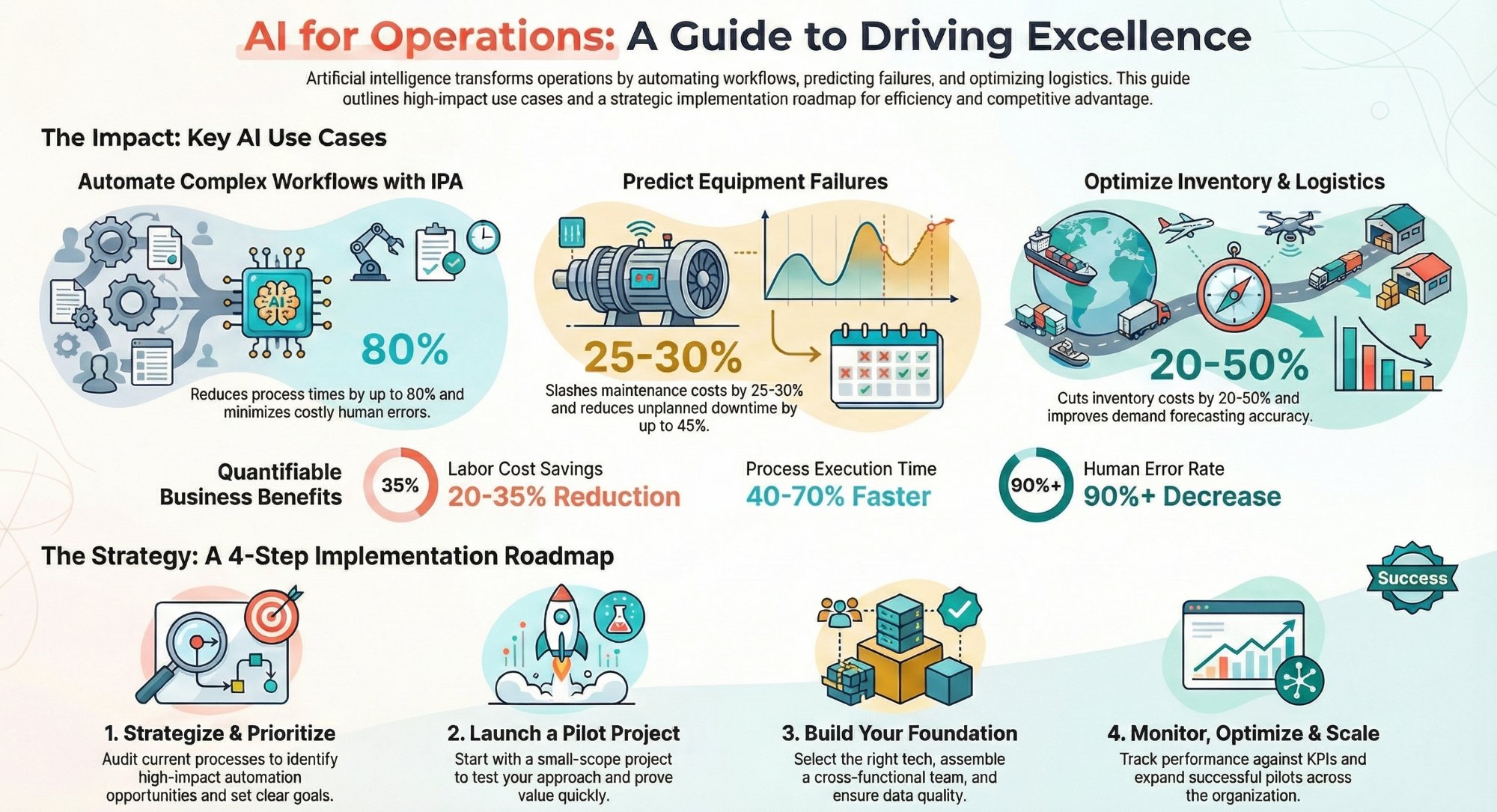
AI and automation use cases for operations teams
The operational playbook: where automation reclaims the most hours across an ops function.
Read the guide →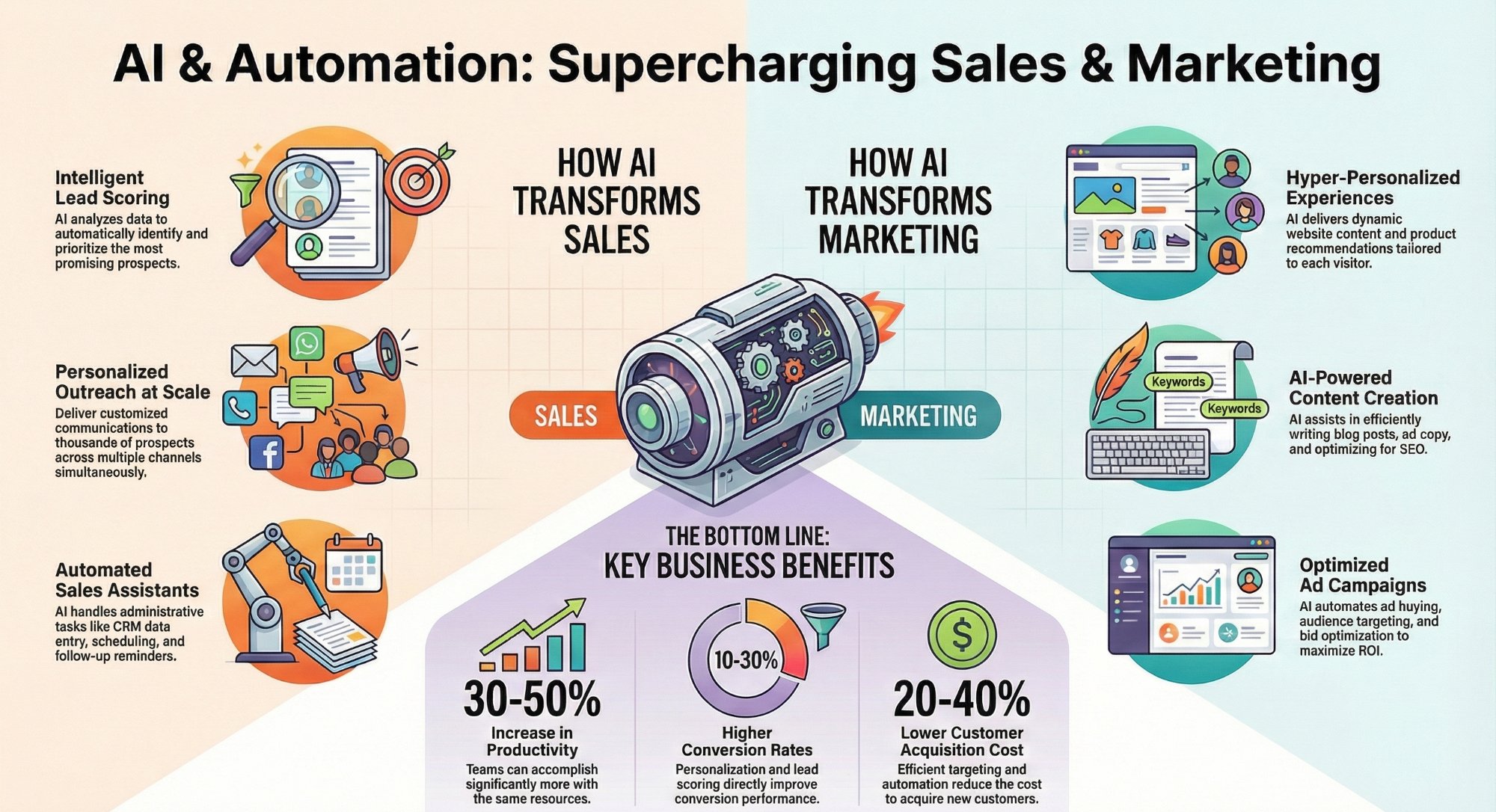
AI and automation use cases for sales and marketing teams
From lead research to campaign reporting, the automations that move revenue.
Read the guide →
The Automation stage, built for you
See what this looks like at full scale: your data flows connected, the busywork gone.
See the offer →Want your automation stack built for you?
Book a free 30-minute strategy call. We will map your highest-ROI workflows and give you a build roadmap on the spot. If we are not the right team for you, we will say so and point you somewhere better.
Book a Free Strategy Call →Free 30-minute call. Honest take, even if that means "you do not need us yet."