AI and automation use cases for finance teams, from busywork to strategy
Finance professionals lose up to 70% of their time to manual work. Here is where AI and automation give it back, with real ROI ranges.
 By Ishan Vats · Founder of IV Consulting · builds AI agents & automations for 150+ teams
Some links below are affiliate links. If you buy through them we may earn a commission, at no extra cost to you.
 QuickBooksBooked
 XeroReconciled
 StripeMatched
AI and automation move finance teams off manual data entry and onto strategic work. The highest value use cases are accounts payable and receivable, financial close and reconciliation, cash flow forecasting, expense management, FP&A, audit and compliance, tax, and credit risk. Real results are well documented: 60 to 80% lower AP costs, 30 to 50% faster close, and 85 to 95% forecast accuracy. Start with one high volume process, prove the ROI, then expand.
The case
Why AI and automation matter for finance teams
Finance teams are under more pressure than ever to deliver accurate insight faster while managing complex compliance requirements. Yet the work has stayed stubbornly manual. Finance professionals spend up to 70% of their time on repetitive tasks like data entry, reconciliation, and report generation. That is time not spent on analysis, planning, or the decisions that actually move the business.
AI and automation close that gap. They shift the finance function from routine data processing to strategic decision-making by:
- Reducing manual workload: automating routine tasks frees up time for strategic analysis.
- Improving accuracy: AI systems minimise human error in calculations and data processing.
- Enhancing decisions: real-time insight enables faster, data-driven financial choices.
- Ensuring compliance: automated controls hold up regulatory compliance consistently.
- Scaling operations: technology absorbs growing transaction volumes without proportional headcount.
The map
Eight high-value finance use cases
These are the eight applications where finance teams see the clearest, fastest return. Each one is a discrete workflow you can build and prove on its own.
1. Accounts payable and receivable automation
One of the most impactful applications. The system reads invoices with OCR, intelligently matches them to purchase orders and receipts, schedules and executes payments, runs smart dunning on overdue receivables, and detects fraud through pattern recognition. Tools like Make can wire your invoicing inbox straight into QuickBooks or Xero so nothing is keyed in by hand. The ledger underneath it is a separate decision, and a costlier one than it looks: our QuickBooks vs Xero comparison works through what each one charges once more than five people need a login.
2. Financial close and reconciliation
AI accelerates month-end and quarter-end close: automated reconciliation across systems, exception-based reporting that surfaces only what needs attention, AI-suggested journal entries, automated variance analysis and commentary, and continuous close processes that spread the workload across the month instead of a crunch at the end.
3. Cash flow forecasting and treasury management
AI excels at reading historical patterns and predicting outcomes. Machine learning models predict cash positions with high accuracy, automate cash positioning across accounts and entities, recommend working capital optimisations, monitor liquidity in real time, and analyse foreign exchange risk with hedging suggestions.
4. Expense management
Automation transforms employee expense reporting: mobile receipt capture with automatic data extraction, real-time policy compliance checks, automated categorisation and coding, smart approval routing by amount and type, and corporate card integration for seamless reconciliation.
5. Financial planning and analysis (FP&A)
AI is reshaping planning, budgeting, and forecasting: automated data consolidation from multiple sources, AI-driven scenario modelling and sensitivity analysis, predictive analytics for revenue and expenses, automated report generation with natural-language insight, and rolling forecasts that update continuously.
6. Audit and compliance
Intelligent automation makes compliance and audit prep manageable: continuous control monitoring instead of periodic sampling, anomaly detection for potential fraud or errors, automated documentation and evidence collection for audit trails, regulatory reporting automation, and AI-powered risk assessment and prioritisation.
7. Tax management
Tax is complex and always changing. Automation handles tax calculation across jurisdictions, real-time provision estimation, transfer pricing documentation, return preparation assistance, and regulatory change monitoring with impact assessment.
8. Credit risk assessment
AI sharpens risk evaluation for companies extending credit: machine learning models that assess creditworthiness from diverse data sources, real-time credit limit recommendations, early warning systems for deteriorating customer health, automated decisioning within defined parameters, and portfolio risk monitoring.
The numbers
Business impact by use case
The documented ranges below come from finance teams that have implemented these workflows. Use them to prioritise and to build your business case.
| Use case | Documented impact |
|---|---|
| Accounts payable / receivable | 60 to 80% lower processing cost, invoice handling cut from days to hours |
| Financial close & reconciliation | 30 to 50% shorter close cycle, faster reporting and decisions |
| Cash flow forecasting | 85 to 95% forecast accuracy, better capital allocation, lower borrowing cost |
| Expense management | 75% less processing time, materially better policy compliance |
| Financial planning & analysis | Forecasts produced 5 to 10x faster, accuracy improved 20 to 30% |
| Audit & compliance | 40 to 60% less audit prep time, stronger control effectiveness |
| Tax management | 30 to 50% time savings, reduced compliance risk |
| Credit risk assessment | Lower bad debt expense while enabling safe revenue growth |
The rollout
Five steps to implement it well
Assess current state and prioritise
Map your existing finance processes and find the pain points. Quantify time spent on manual tasks, evaluate potential ROI for each use case, separate quick wins from strategic initiatives, and honestly assess your data quality and system readiness before you commit.
Build the business case
Calculate expected cost savings and efficiency gains. Identify the qualitative benefits too: accuracy, employee satisfaction, speed. Estimate implementation cost and timeline, define success metrics and KPIs, and secure executive sponsorship before the build starts.
Choose the right technology partner
Evaluate vendors on finance-specific expertise, integration with your existing systems, scalability, and security and compliance features. Check references and case studies in your industry. The connector layer matters as much as the AI: tools like Make and n8n link QuickBooks, Xero, Stripe, and your bank without custom code.
Start with a pilot program
Select a manageable scope, define clear success criteria, and involve end-users early. Document lessons learned and use the pilot results to refine your approach before the broader rollout. A clean, contained pilot is the fastest path to organisational buy-in.
Focus on change management
Communicate the vision and benefits to every stakeholder. Address job-displacement concerns head on, provide thorough training and support, empower champions inside the team, and celebrate early wins to build momentum.
The payoff
Benefits and ROI you can expect
Financial benefits
30 to 70% reduction in process costs through labour savings and efficiency. Working capital optimisation that can free up 10 to 20% of working capital. Fewer error-correction costs and compliance penalties. Faster close that surfaces insight earlier for a real competitive edge.
Operational benefits
Processes that took days now finish in hours or minutes. 90 to 99% fewer errors on automated processes. Scalability without proportional headcount, and consistency across locations and entities.
Months 1 to 6
Implementation runs in months one to three with upfront cost and limited benefit. Early benefits emerge in months four to six as the first processes go live.
Month 7 onward
Full benefits land in months seven to twelve as adoption matures. From year two, continuous improvement compounds and drives additional value.
Avoid these
Common challenges and how to solve them
Resistance to change
Frame automation as augmentation, not replacement. Involve team members in selecting and designing the solution, retrain people toward higher-value roles, and share success stories from similar organisations.
Poor data quality
Run a data quality assessment before implementation. Invest in cleansing and standardisation, establish data governance, and build validation rules directly into the automated workflows so bad inputs are caught early.
Integration complexity
Choose solutions with pre-built connectors to common systems, or a data integration platform as middleware. Start with use cases that touch fewer systems, and work closely with IT on integration architecture.
Security and compliance concerns
Involve security and compliance teams early in vendor evaluation. Verify certifications such as SOC 2 and ISO 27001, implement proper access controls and audit trails, and run regular security assessments.
What is next
Future trends in finance automation
Generative AI for finance
Large language models are starting to transform finance work: automated generation of financial narratives, natural-language queries of financial data, and first-draft creation of reports and presentations.
Autonomous finance
Leading organisations are moving toward autonomous finance, where systems run end-to-end processes with minimal human intervention, including self-healing processes and AI-driven decision-making.
Real-time finance
Technology is enabling continuous processes rather than periodic cycles: continuous close instead of month-end close, real-time dashboards and alerts, and on-demand financial reporting.
Predictive and prescriptive analytics
AI is moving past descriptive reporting to predict outcomes and recommend actions, with predictive models for revenue, expenses, and cash flow, plus early warning systems for financial risk.
FAQ
Questions finance leaders ask first
Which finance process should we automate first?
Will AI and automation replace finance jobs?
How accurate is AI for forecasting and close?
How long until we see ROI from finance automation?
Do we need to replace our existing finance tools?
What if we want help scoping and building this?
Ishan Vats
Founder, IV Consulting · AI & automation consultant
I build production AI agents, automations, and MCP servers for teams from startup to enterprise. 150+ ops transformations over 10+ years. If you want this mapped to your own stack, I'll do it with you on a free call.
Book a free strategy call →Keep reading
Related guides and work
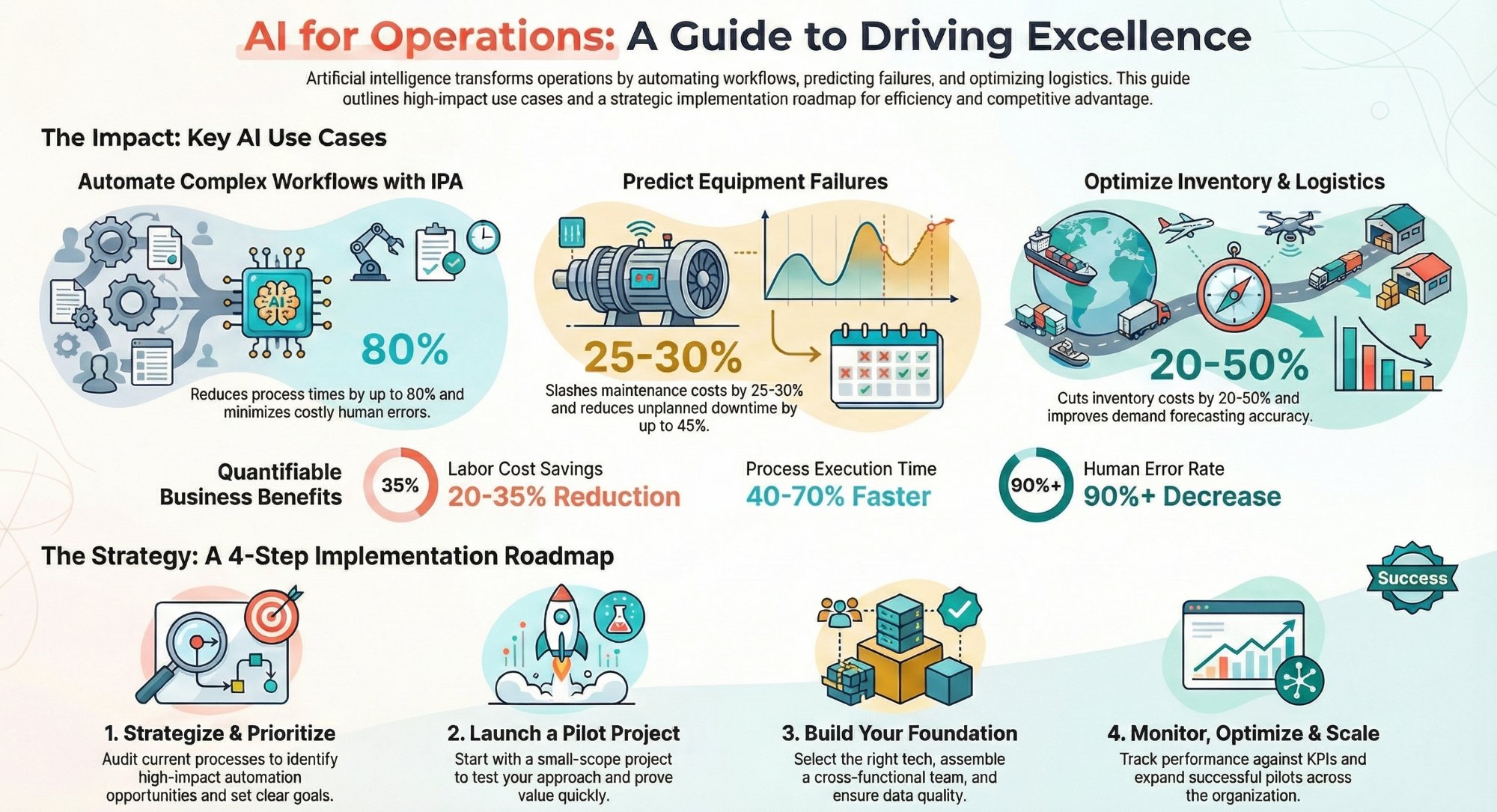
AI and automation use cases for operations teams
The operations counterpart: where automation reclaims the most hours across ops.
Read the guide →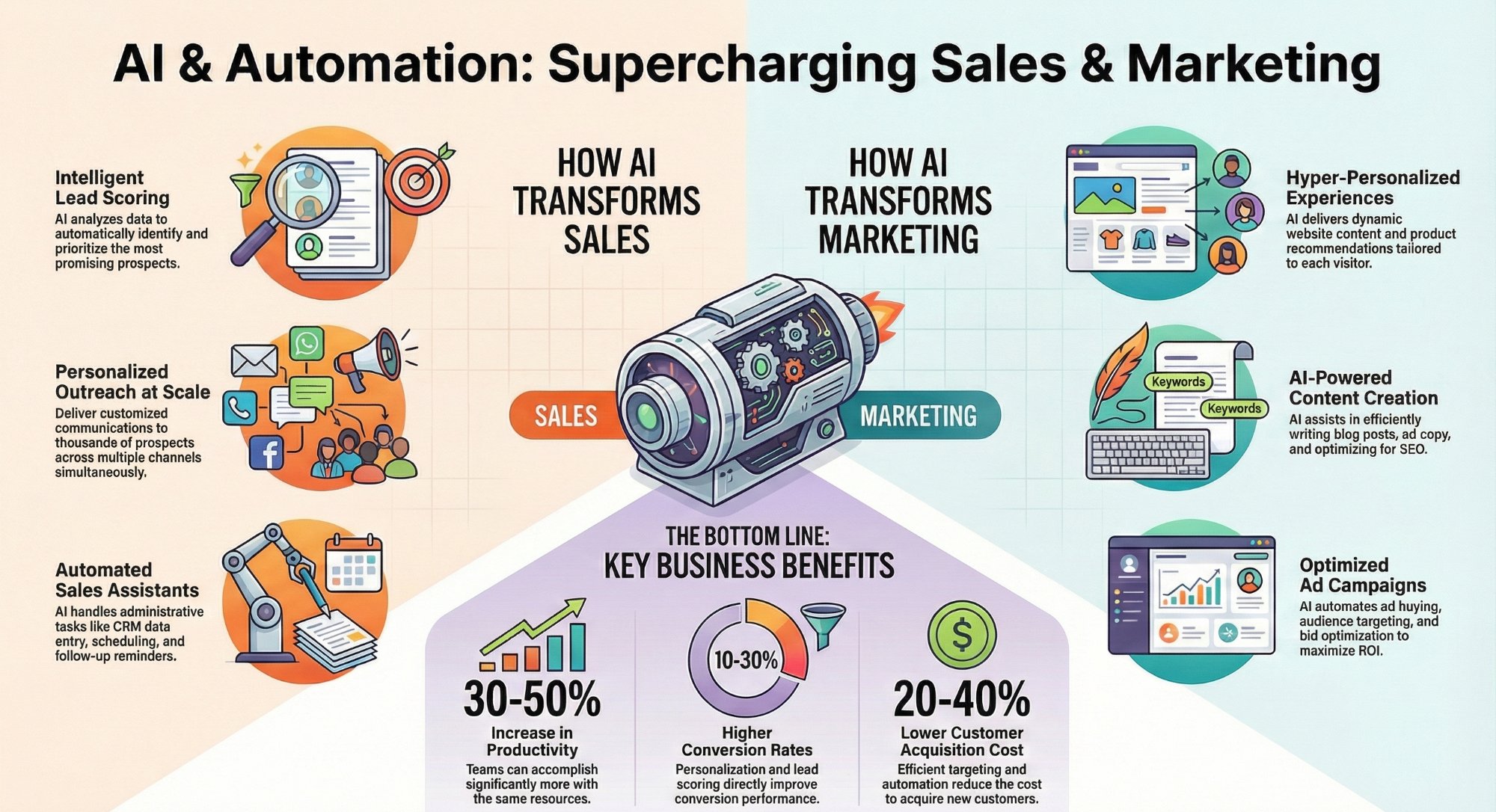
AI and automation use cases for sales and marketing
How revenue teams use AI to research, route, and follow up without the busywork.
Read the guide →
The Automation stage, built for you
Your finance tools connected, the reconciliation and reporting busywork gone.
See the offer →Want your automation stack built for you?
Book a free 30-minute strategy call. We will map your highest-ROI workflows and give you a build roadmap on the spot. If we are not the right team for you, we will say so and point you somewhere better.
Book a Free Strategy Call →Free 30-minute call. Honest take, even if that means "you do not need us yet."