EasyDMARC vs dmarcian vs Cloudflare: DMARC for cold email, priced for 2, 4 and 10 domains
From 6 to 9 November 2026, Outlook.com bounced mail from domains with no DMARC record. Microsoft has since called it a faulty spam rule and rolled it back, but the week sent a lot of cold emailers shopping for DMARC tools. We read all three pricing pages on the same day, priced a cold-email domain set at three sizes, and took a side. The DMARC lesson is our own: a duplicate record on one of our sending domains turned up in an audit last month.
 By Ishan Vats · Founder of IV Consulting · runs a 12-inbox Smartlead sending pool
 12 inboxes, 4 domainsSmartlead on Google Workspace
For DMARC on cold email domains, use Cloudflare DMARC Management: it is free on every Cloudflare plan and does the one job a cold domain needs, which is reading the aggregate reports that prove your sender passes. The catch is that the domain's DNS must sit on Cloudflare. On list prices read 16 November 2026, annual billing, the paid options split by domain count. dmarcian Basic is the cheapest paid plan at $239.88 a year for up to 2 domains, but a third domain forces Plus at $2,388. EasyDMARC Plus is $431.88 a year for 2 domains and Premium is $863.88 for 4. So at the usual three inboxes per domain, a 12-inbox pool (4 domains) costs $0, $863.88 or $2,388 a year to monitor. Pay for EasyDMARC or dmarcian only on a main business domain with many senders. As for Outlook: Microsoft says the 6 to 9 November rejections came from a faulty spam rule that it has rolled back. Bulk senders still need DMARC anyway.
The trigger
Is Outlook rejecting email from domains without DMARC?
Not any more. From about 6 to 9 November 2026, Outlook.com, Hotmail and Live refused some mail from domains with no DMARC record, with a 550 5.7.1 bounce saying the message "lacks SPF/DKIM/DMARC Auth Records". Microsoft logged it as Service Health incident EX1545193. It blamed a spam enforcement rule update, said the impact ended at 11:02 UTC on 9 November, and rolled the update back fully.
For a few days it looked like Microsoft had quietly extended its sender rules to everyone. Mail providers wrote it up as a policy change and a Hacker News thread on it passed 500 points. It was a fault, and MailRoute, which had first read it as policy, published a correction quoting Microsoft's final update. Two things from that week still matter if you send cold email:
- Refused mail was never retried. If a sequence step went to Outlook.com or Hotmail addresses in that window from a domain with no DMARC record, those prospects never got it. Check Smartlead for bounces dated 6 to 9 November and decide whether to resend.
- A DMARC record got mail through. MailRoute cites seed tests showing a bare p=none record, even one published only at the parent domain, was enough to clear the bounce at all 16 test mailboxes.
The rules that existed before the bug are unchanged. Google and Yahoo have required DMARC from bulk senders since February 2024, and Microsoft has required it from domains sending more than 5,000 messages a day to its consumer addresses since May 2025. A cold-email domain set is a bulk-sending operation by design. Bug or no bug, a sending domain without DMARC is a liability.
Sources, read 16 November 2026: MailRoute's account of Microsoft's incident notice (Service Health is only visible to Microsoft 365 admins) and dmarcian's write-up of the rejections.
The requirement
What does a cold email domain actually need from DMARC?
Exactly one DMARC record per sending domain, a reporting address so you can see the results, and SPF and DKIM passing for the one service that sends. A cold domain usually has a single legitimate sender, the Google Workspace or Microsoft 365 inboxes your sequencer connects to. So the reports have one question to answer: does that sender pass, and is anyone else sending as you?
That is a much smaller job than DMARC on a main company domain. There, invoicing, the CRM, the newsletter tool, the help desk and the HR system all send as you, and most of a DMARC tool's value is finding and fixing each one. On a lookalike cold domain bought last month, nothing else should be sending at all.
When we audited IV's own outbound on 13 October 2026, one sending domain had two DMARC records, one at p=reject and one at p=none, left over from an old newsletter tool. Gmail's headers showed no DMARC result at all, because a receiver that finds two DMARC records treats the domain as having none. We replaced them the same day with one p=reject record, and test sends from all 12 inboxes now land in Primary with SPF, DKIM and DMARC passing. Had that domain stayed broken, Outlook would probably have treated it as having no DMARC during the 6 to 9 November fault. A paid dashboard would have flagged the duplicate, but so does a free DNS lookup, and so does Cloudflare's record analysis.
The record itself is one TXT line at _dmarc.yourdomain.com. Start in monitoring mode:
v=DMARC1; p=none; rua=mailto:reports@yourdomain.com
Once the reports show your one sender passing for a week or two, move to p=quarantine or p=reject. That stops anyone else sending as your cold domain, which matters because spoofed spam from your domain drags down the reputation your warmed inboxes depend on. The rua address is where the reports go, and that address is what the three tools below compete to be.
The tools
EasyDMARC vs dmarcian vs Cloudflare DMARC Management: how do they compare?
All three read your aggregate (rua) reports and show which sources send as your domain and whether they pass. Cloudflare is free but works only when your DNS is on Cloudflare. dmarcian prices by active domain in steep steps of 2, 8 and 15 domains. EasyDMARC steps at 2 and 4 domains and then goes to custom pricing.
| Fact | Cloudflare DMARC Management | EasyDMARC | dmarcian |
|---|---|---|---|
| Price | Free, "available on all plans" | Plus $35.99/mo annual ($44.99 monthly); Premium $71.99/mo annual ($89.99 monthly) | Basic $19.99/mo annual ($24 monthly); Plus $199 ($240); Enterprise $499 ($600) |
| Domains per plan | No limit published | Plus 2, Premium 4, then custom | Basic 2, Plus 8, Enterprise 15 active domains |
| Message allowance | Not published | 1,200,000 emails a year on Plus and Premium | 100,000 a month Basic, 1,000,000 Plus, 5,000,000 Enterprise |
| Data history | Not published | 3 months Plus, 1 year Premium | 3 months Basic, 1 year Plus, unlimited Enterprise |
| Hard requirement | Domain must use Cloudflare DNS; apex domains only | None, any DNS host | None, any DNS host |
| Extras that matter | Lists every sending source, SPF record analysis | Premium adds proactive alerts, EasySPF and email support | Forensic (RUF) reports and Alert Central from Basic; 30-day trial |
| Free tier | The whole product | Free trial, no card required | Personal plan, but non-business domains only and audited |
Sources, read 16 November 2026: Cloudflare DMARC Management docs, easydmarc.com/pricing (business plans tab; it has a separate MSP tab we did not price) and dmarcian.com/pricing. US dollars before tax. We have no commercial relationship with any of the three.
Two lines in that table decide most cold-email setups. First, dmarcian's free Personal plan is not a loophole: its page says business domains are audited and the account expires. Second, Cloudflare's requirement is a nameserver change, not a purchase. Cold domains usually sit at a cheap registrar with nothing else on them, so pointing their nameservers at a free Cloudflare account takes minutes and breaks nothing, provided you copy the SPF, DKIM and MX records across first.
The arithmetic
What does DMARC monitoring cost for 2, 4 and 10 cold email domains?
At the common ratio of three inboxes per domain, 6 inboxes is 2 domains, 12 is 4 and 30 is 10. On annual billing that costs $0 / $431.88 / $239.88 on Cloudflare, EasyDMARC and dmarcian at 2 domains. At 4 domains it is $0 / $863.88 / $2,388. At 10 it is $0, a custom EasyDMARC quote, or $5,988 on dmarcian.
List prices from each vendor's own pricing page on 16 November 2026, annual billing unless stated, before tax and negotiated discounts. Each column uses the cheapest plan that covers the domain count. Message allowances are not binding at these sizes: 12 inboxes sending 20 a day for 22 working days is about 5,300 emails a month, far under every plan's limit. We did not test deliverability with each tool; this is a cost comparison, and the verdict rests on what a cold domain needs.
| Cold domain set | Cloudflare | EasyDMARC | dmarcian |
|---|---|---|---|
| 2 domains (6 inboxes) | $0 | Plus: $431.88 a year ($539.88 monthly) | Basic: $239.88 a year ($288 monthly) |
| 4 domains (12 inboxes) | $0 | Premium: $863.88 a year ($1,079.88 monthly) | Plus: $2,388 a year ($2,880 monthly) |
| 10 domains (30 inboxes) | $0 | Over Premium's 4: custom quote | Enterprise: $5,988 a year ($7,200 monthly) |
| Per domain per month at 4 domains | $0 | $18.00 | $49.75 |
The number that surprised us is the cliff. dmarcian is the cheapest paid tool at 2 domains and roughly ten times the price at 3, because Basic stops at 2 active domains and the next plan is Plus. A cold email setup almost never stays at 2 domains: you add domains every time you add inboxes, and on our own pool the fix for a capacity ceiling was 9 more inboxes on three fresh domains. On a per-domain price list, the tool that looks cheap on day one is the one that jumps when you scale.
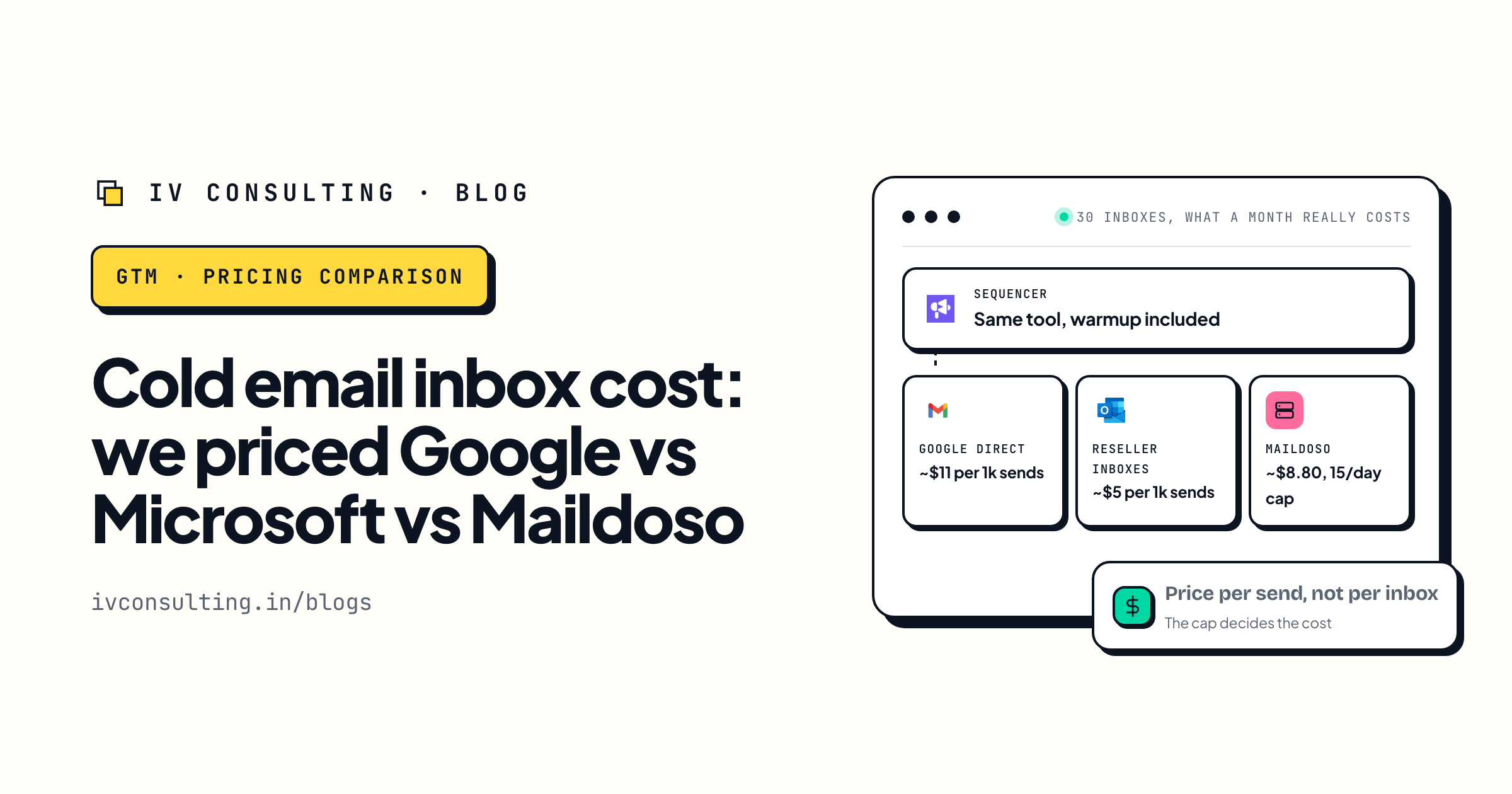
Set that against the rest of the sending bill. Inboxes run about $7 per seat per month on direct Google Workspace or Microsoft 365, and domains about $12 to $15 a year, as we priced in cold email inbox costs on Google Workspace vs Microsoft 365 vs Maildoso. Twelve inboxes on direct Workspace come to about $1,000 a year. dmarcian Plus would cost more than twice the inboxes it watches.
DMARC keeps your mail out of the bounce folder. It does not make anyone reply. Once the plumbing passes, the variable that moves meetings is who you send to and why now. See how we map the buying signals for your ICP so the inboxes you just protected send to accounts with a reason to answer.
The verdict
Our verdict: which DMARC tool should a cold email sender use?
Put every cold email domain on Cloudflare DNS and use Cloudflare DMARC Management, free. A cold domain has one legitimate sender, so the paid tools' main strength, finding and fixing dozens of sending sources, has nothing to work on. Spend money on DMARC only for the main company domain, and only if it has many senders and nobody on your team owns its DNS. Three reasons, and the two cases where we would pay.
1. The job is a yes or no
On a cold domain the reports answer one question: does the Google or Microsoft sender pass, and is anything else sending? A free dashboard answers it as well as a $2,388 one.
2. Per-domain pricing punishes scale
Cold setups add domains in threes. dmarcian goes from $239.88 to $2,388 at domain 3; EasyDMARC goes custom at domain 5. Free has no cliff.
3. Our failure was a record, not a dashboard
The duplicate record we found was an audit and DNS problem. One correct TXT record fixed it the same day, and a lookup would have caught it without any tool.
Pay for EasyDMARC Premium if
- Your main domain sends from several platforms (CRM, billing, newsletter) and you want alerts when one breaks
- You have 3 or 4 domains that cannot move to Cloudflare DNS
- You want email support and a year of history: $863.88 a year
Pay for dmarcian Basic if
- You have exactly 1 or 2 business domains and will not change DNS host
- You want forensic reports and alerting at the lowest paid price: $239.88 a year
- You do not expect to add a third domain soon
The DMARC lesson and the sending pool are our own: 12 Google Workspace inboxes behind Smartlead, and one duplicate record found and fixed in our 13 October audit. The prices are each vendor's published list prices, read today. We have not run EasyDMARC or dmarcian on our domains, so their columns are published plans, not test results.
The setup
How do you set up DMARC monitoring on a cold email domain for free?
Five steps, about 15 minutes per domain: copy the existing DNS records, move the nameservers to a free Cloudflare account, publish exactly one DMARC record at p=none, turn on DMARC Management, then tighten to reject once the reports show only your sender.
Check for duplicates first
Look up the TXT records at _dmarc.yourdomain.com. If there is more than one, delete all but one. Two records count as none, which is exactly what we found on ours.
Move DNS to Cloudflare
Add the domain to a free Cloudflare account, confirm the imported MX, SPF and DKIM records match your Google or Microsoft setup, then switch nameservers at the registrar.
Publish one record at p=none
v=DMARC1; p=none; plus a rua address. Monitoring mode changes nothing about delivery while you watch.
Turn on DMARC Management
Cloudflare adds its own rua address to your record. Reports can take up to 24 hours to start arriving.
Tighten after a clean week or two
If the only source passing is your inbox provider, move to p=quarantine and then p=reject. That locks out anyone spoofing the domain your warmup built up.
Then send a test from each inbox to a Gmail address and check the headers for SPF, DKIM and DMARC "pass". If your sending pool is part of a bigger outbound system, the same audit habit applies upstream: we explain where the real costs hide in what GTM engineering is.
FAQ
Questions about DMARC tools for cold email
Is Outlook still rejecting email from domains without DMARC?
No. Microsoft attributed the 6 to 9 November 2026 rejections to a faulty spam enforcement rule update, said the impact ended at 11:02 UTC on 9 November, and rolled the update back. Its existing rule that domains sending more than 5,000 messages a day to Outlook.com need DMARC still applies, and refused mail from that week was never retried.
Do cold email domains need a DMARC record?
Yes. Google and Yahoo have required DMARC from bulk senders since February 2024 and Microsoft from high-volume senders since May 2025. Publish exactly one DMARC record per sending domain, because receivers treat two records as none.
Is Cloudflare DMARC Management free?
Yes. Cloudflare lists it as available on all plans, including the free one, but the domain must use Cloudflare DNS and it works on apex domains only. It adds its own reporting address to your DMARC record and shows every source sending as your domain.
How much do EasyDMARC and dmarcian cost?
On prices read 16 November 2026, EasyDMARC Plus is $35.99 a month billed annually ($44.99 monthly) for 2 domains, and Premium is $71.99 ($89.99) for 4 domains. dmarcian Basic is $19.99 a month billed annually for 2 domains, Plus is $199 for 8 and Enterprise is $499 for 15. dmarcian's free Personal plan is for non-business domains only.
Should a cold email domain use p=none or p=reject?
Start at p=none with a reporting address. Once the reports show only your inbox provider sending and passing, usually after a week or two, move to p=quarantine and then p=reject so nobody can spoof the domain. We fixed our own duplicate record by replacing it with a single p=reject record.
Ishan Vats
Founder, IV Consulting · GTM engineering & automation
I build outbound systems on Clay, Smartlead and n8n, and run our own 12-inbox sending pool. Every price here was read from the vendor's own pricing page on 16 November 2026. We have not run EasyDMARC or dmarcian on our domains, so their columns are published pricing, not test results.
Read: what GTM engineering is →Keep reading
Related cold email and GTM guides
Cold email inbox cost, priced
Google Workspace vs Microsoft 365 vs Maildoso.
Read the breakdown →
What is GTM engineering?
Including the audit that found our DMARC bug.
Read the guide →
Artisan vs 11x vs Clay + Smartlead
AI SDR cost per meeting, priced.
Read the comparison →Records pass, replies don't? The problem is upstream of DNS.
In a signal audit we look at your ICP and one live campaign, check the sending setup in passing, and find which buying signals actually show up for your accounts, so the inboxes you protect send to people with a reason to reply.
Book the signal audit →Free and practical. If your setup is already sound, we will say so.