The 5-step process improvement framework that actually works for small teams
No Six Sigma badge. No retainer. Just a clear, repeatable system you can start using this week to recover 10+ hours.
 By Ishan Vats · Founder of IV Consulting · 150+ ops transformations over 10+ years
Some links below are affiliate links. If you buy through them we may earn a commission, at no extra cost to you.
 DocumentSOPs & process map
 MeasureCycle time dashboard
 MakeAuto handoffs
 n8nTool syncing
 PipedriveCRM in sync
The 5-step process improvement framework for small teams is: map your current process exactly as it runs, measure cycle time and error rate to set a baseline, redesign by removing and simplifying steps, automate the repetitive parts on top of the clean process, then review and iterate monthly. Done in this order it reliably frees up 10 or more hours a week without a Six Sigma badge or a big budget.
Step one
Map your current process before touching anything
Your team is busy. Everyone is working hard. But things still slip through the cracks. The problem is not your people, it is your processes. And whatever size your team is, you do not need a Six Sigma certification or a consulting firm on retainer to fix them. You need a clear, repeatable framework you can start using this week.
The biggest mistake business owners make is jumping straight to solutions. You cannot fix what you cannot see. Start by picking one process that frustrates your team most: client onboarding, invoice approvals, content publishing, and document it exactly as it happens today. Not the ideal version. The real, messy, current version.
Walk through it end to end with your team. Write down every step, handoff, and decision point. Note who is responsible for each step. Flag where things stall or get confused. You can use a Notion page, a ClickUp whiteboard, or pen and paper. This step alone reveals 2 to 3 quick wins your team can fix immediately.
Step two
Measure what matters
Once you can see the process, measure it. Three numbers tell the whole story. Track them for one to two weeks before you change anything.
- Cycle time: how long the process takes from start to finish.
- Error rate: how often something goes wrong or has to be redone.
- Bottleneck frequency: where work consistently piles up or stalls.
You need a baseline. Without one, you will never know if your improvements actually worked. If you are using ClickUp or Notion, set up a simple dashboard to track these numbers automatically so the data collects itself while you keep working.
Step three
Redesign the workflow
Focus on three types of change only. A good rule of thumb: if your redesigned process has 30% fewer steps than the original, you are on the right track.
Remove
Kill steps that add no value. Approval layers nobody checks. CC emails nobody reads. Status updates that duplicate what the tool already shows. Every step you delete is a step that can never break again.
Simplify
Combine steps where possible. If three people touch a task before it moves forward, ask whether one person could handle it with clearer guidelines. Fewer handoffs means fewer places for work to stall.
Standardise
Create templates, checklists, and SOPs for repeatable work. This is where Notion and ClickUp shine: build a template once, and your team follows the same playbook every time instead of reinventing the steps.
Step four
Automate the repetitive parts
Once your process is clean and standardised, automation becomes easy. Focus on tasks that are high volume, low complexity, and rule-based: follow-up emails, status notifications, invoice creation, data syncing between tools.
Tools like Make, n8n, and Zapier handle all of this without a line of code. At IV Consulting we build automations that connect ClickUp, Notion, Pipedrive, and dozens of other tools into seamless workflows. Tasks that used to take 20 minutes happen in seconds.
The key principle: build automation on top of clean processes, not messy ones. Automating a broken workflow just makes the mess run faster.
Step five
Review, iterate, and repeat
Process improvement is not a one-time project. It is a habit. Schedule a monthly review, and 30 minutes is enough. Look at your metrics from Step 2 and ask three questions: Are cycle times going down? Are error rates dropping? Are there new bottlenecks?
The companies that win are not the ones that fix everything at once. They are the ones that improve one process at a time, consistently, month after month.
Why it fits
Why this framework works for small teams
Most process improvement frameworks were built for enterprises with dedicated ops teams and six-figure budgets. This one is built for the way small teams actually work.
It starts with observation
You map reality before you touch anything, so every change is aimed at a problem you can actually see, not a guess. That is the difference between fixing the process and just reshuffling it.
It uses tools you already have
Notion, ClickUp, and a single automation tool. No new platform to roll out, no migration project before you see value.
It prioritises quick wins
Small, visible improvements over massive overhauls. Momentum keeps the team bought in and the effort sustainable.
It automates on clean ground
Automation goes on top of a tidy process, never a messy one, so the time savings are real and they last.
FAQ
Questions teams ask before they start
How long does process improvement take to show results?
Where should a small team start with process improvement?
Do I need a consultant to improve our processes, or can we do it ourselves?
What tools work best for documenting and improving business processes?
How do I get team buy-in for process changes?
What if I want help fixing our processes?
Ishan Vats
Founder, IV Consulting · operations & systems consultant
I build operating systems and automations for teams from startup to enterprise. 150+ ops transformations over 10+ years. If you want yours mapped and built right, I'll do it with you on a free call.
Book a free strategy call →Keep reading
Related guides and work
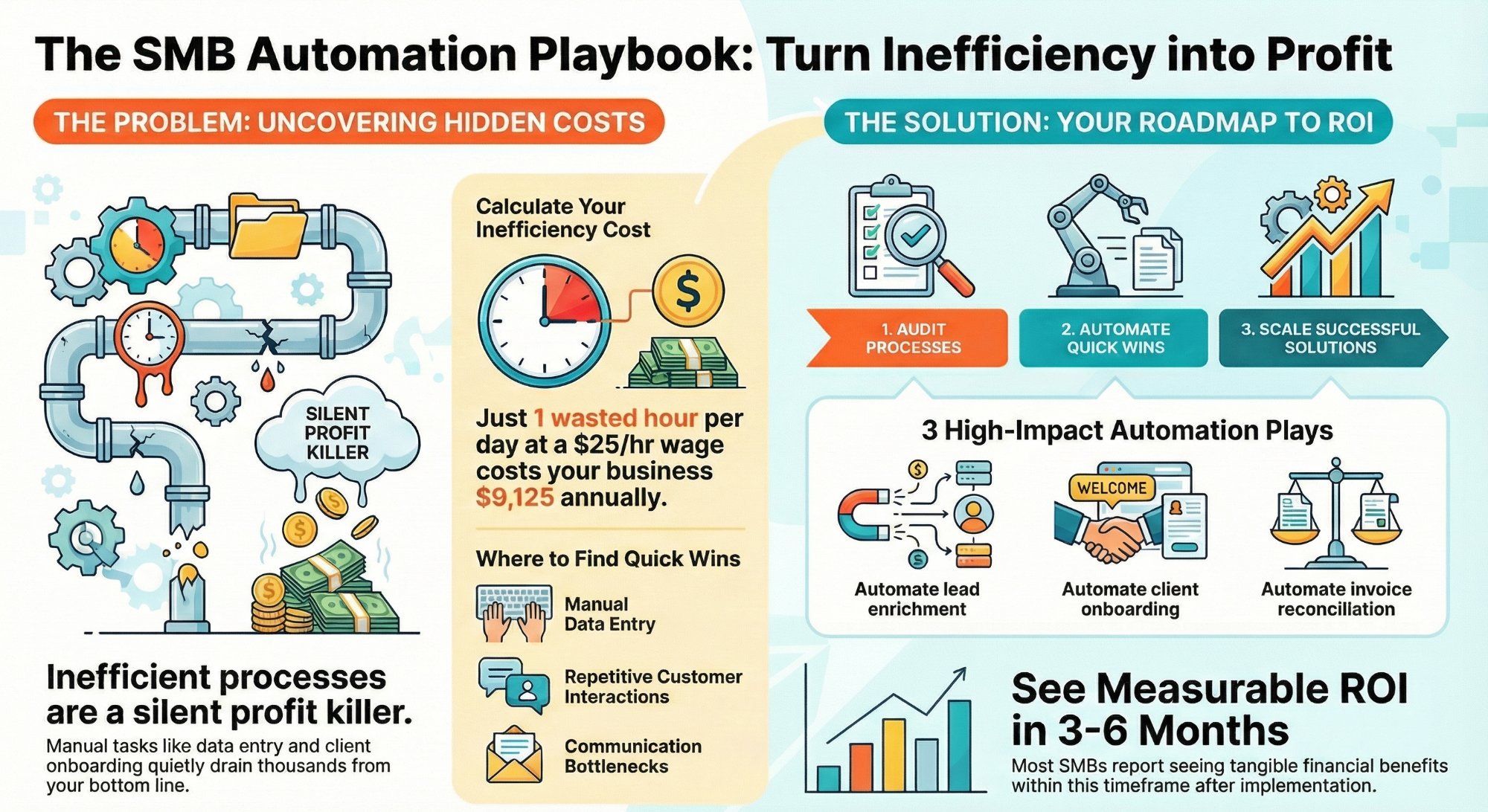
How much are inefficient processes costing your SMB?
Put a real number on the busywork, then see the fastest way to fix it.
Read the guide →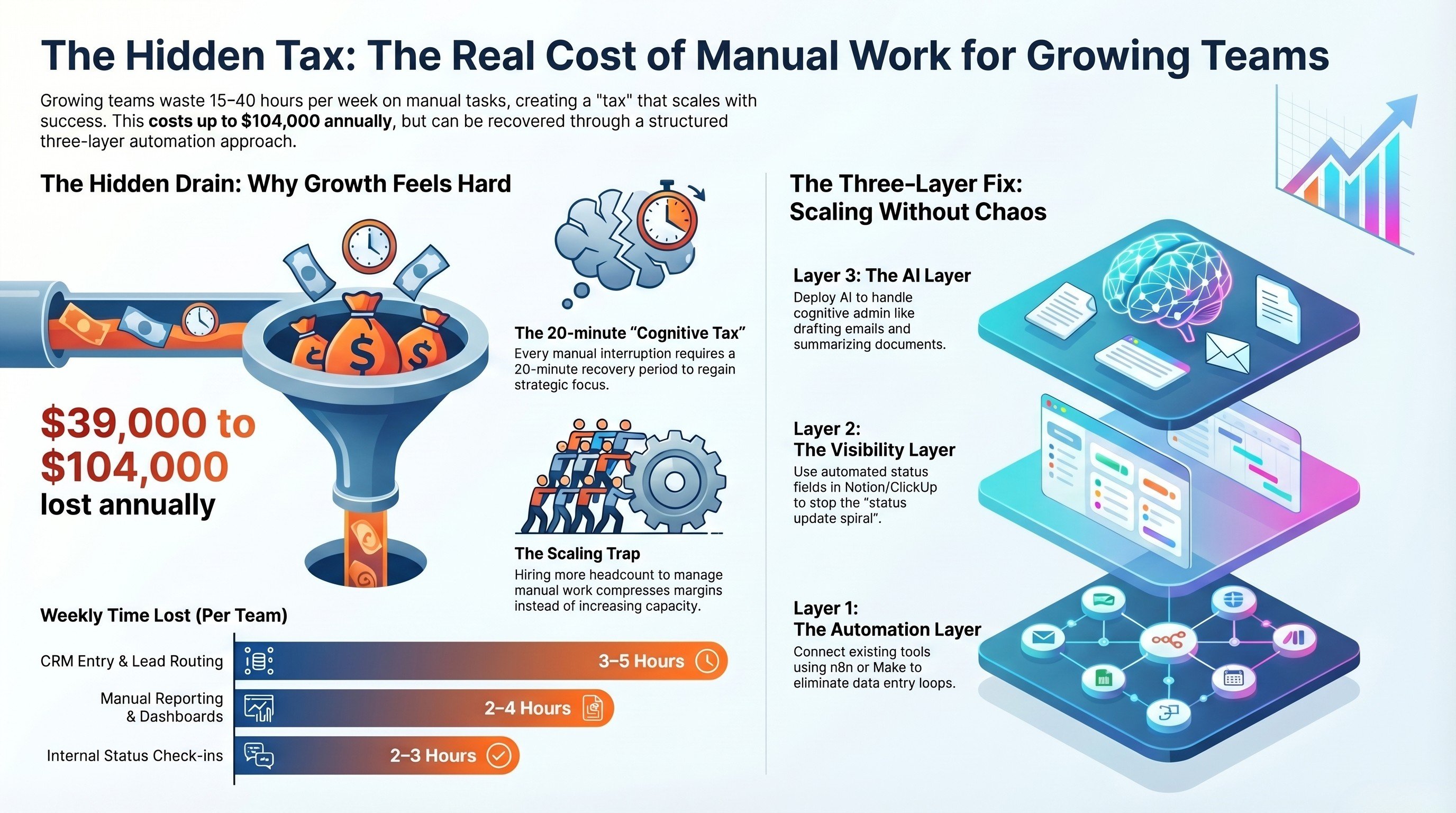
The real cost of manual work for growing teams
Where the hours quietly leak, and the automations that win them back.
Read the playbook →
The Foundation stage, built for you
Your processes mapped, your workspace clean, your SOPs in one place.
See the offer →Want your automation stack built for you?
Book a free 30-minute strategy call. We will map your highest-ROI workflows and give you a build roadmap on the spot. If we are not the right team for you, we will say so and point you somewhere better.
Book a Free Strategy Call →Free 30-minute call. Honest take, even if that means "you do not need us yet."