Introduction
You built the business. You set the vision. But somewhere between strategy and execution, projects keep going sideways. Deadlines slip. Teams miscommunicate. Clients get nervous. The culprit is almost never your people. It is almost always how projects are managed. These are the five project management mistakes most CEOs make, and exactly what to do about each one.
Mistake 1: Buying a Tool and Calling It a System
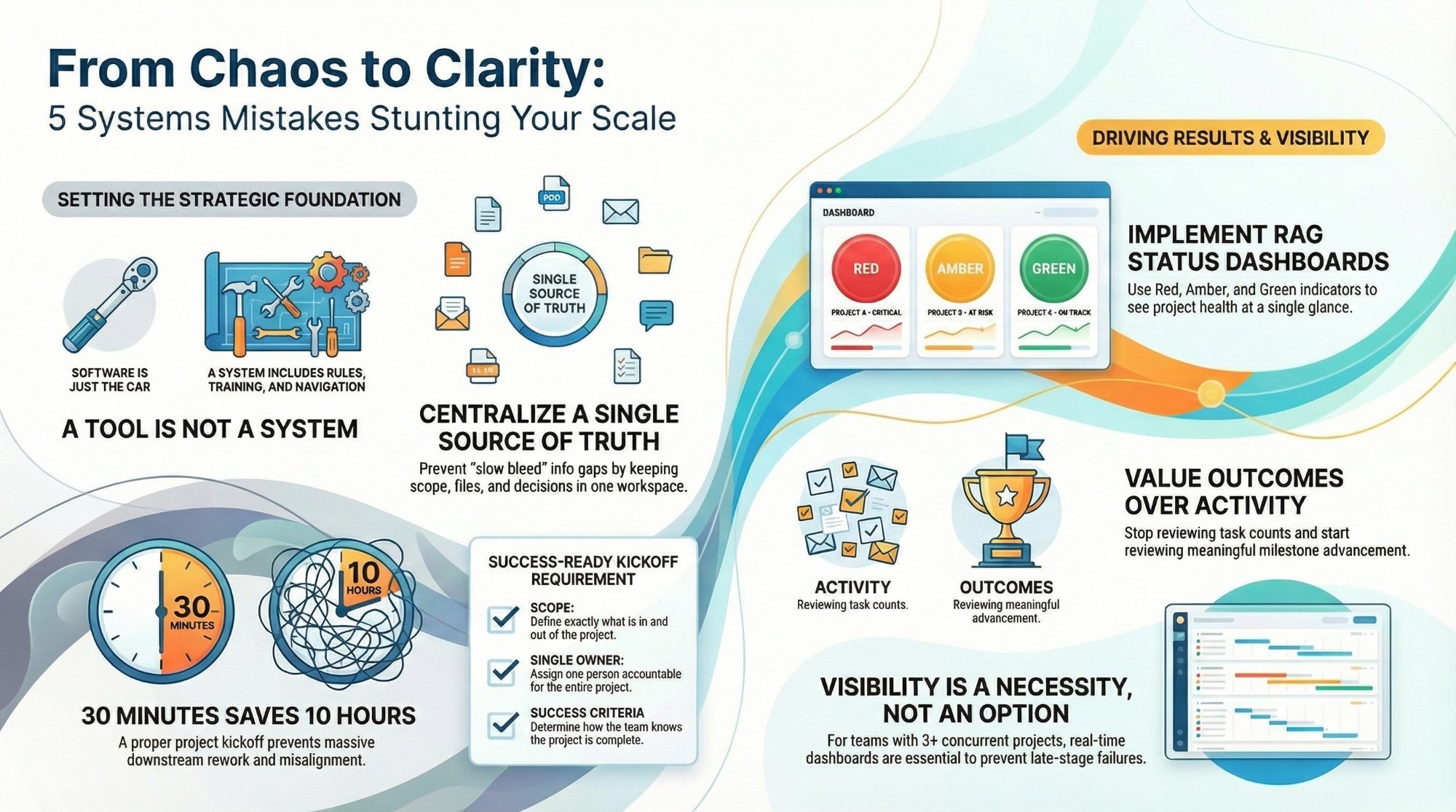
You buy ClickUp, Notion, Monday, or Asana. You onboard the team. Three months later, the workspace is a mess. Nobody follows the same workflow. Half your team is back on spreadsheets. Here is what most people miss: a tool is not a system. A tool is the car. A system is the road, the traffic rules, the driver training, and the navigation combined.
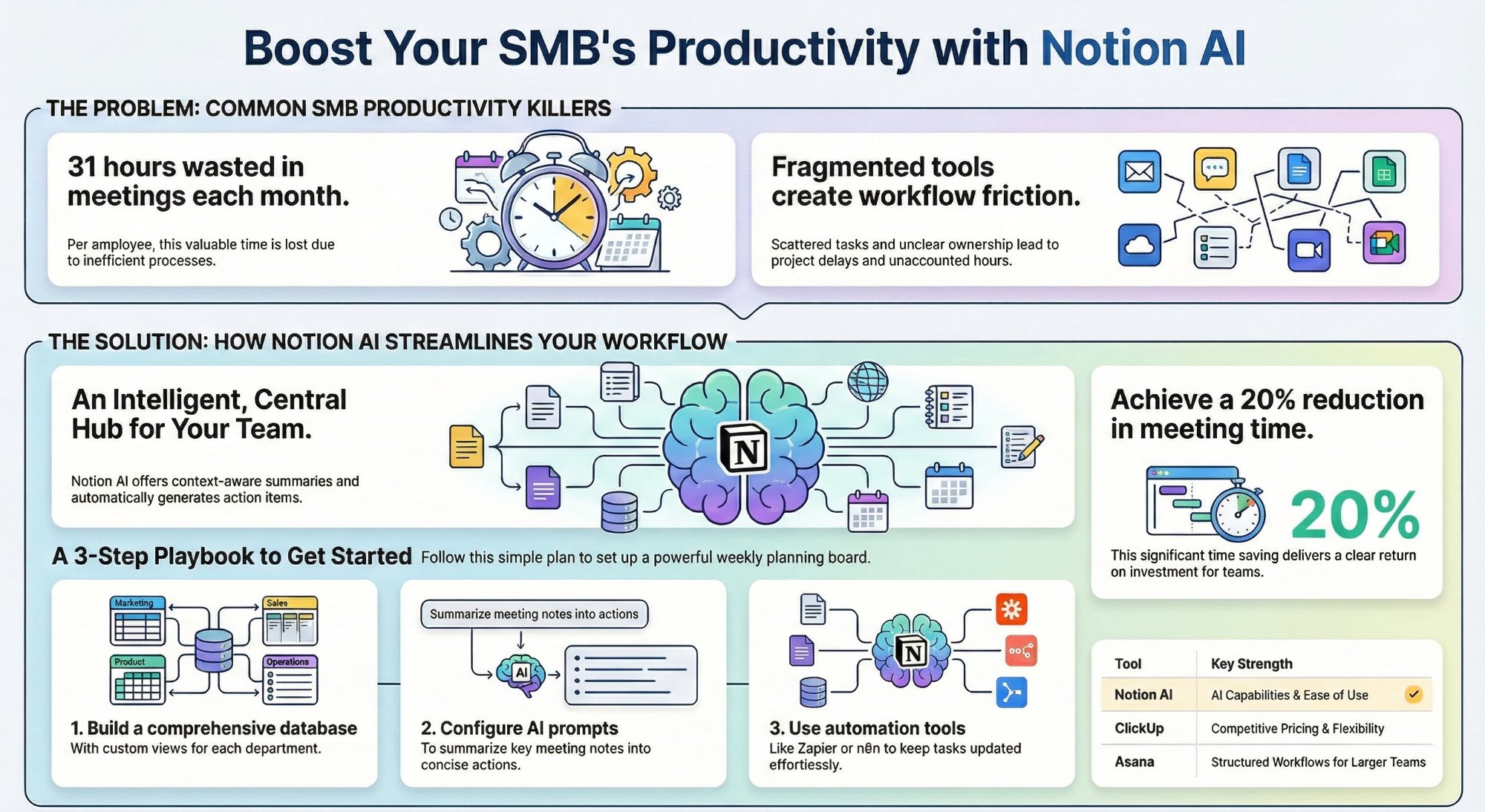
Before you pick a tool, answer these four questions: What stages does every project move through? Who owns each stage? What does "done" look like at each handoff? What gets documented, and where does it live? Once you have answers, build your workspace around them. Related: our guide to choosing the right workspace tool.
Mistake 2: No Single Source of Truth
Your ops lead is on Slack. Your developer checks email. Your PM has a private spreadsheet. Everyone is technically informed. Nobody is working from the same information. This shows up as a slow bleed: things fall through the gaps not because anyone was careless, but because nobody knew where to look.
The fix: centralise everything. One workspace. One dashboard. One place where project scope, status, files, decisions, and conversations live. A poorly configured centralised workspace just creates a messier problem. Structure, naming conventions, and clear ownership rules are what make it work. See our workspace architecture checklist for how to do this properly.
Mistake 3: Skipping the Project Kickoff
Kickoffs feel like formalities. So projects start with a Slack message, a vague brief, and the assumption that everyone knows what done looks like. They almost never do. Thirty minutes at the start of every project saves ten hours of rework downstream. A proper kickoff covers five things: scope (what is in and what is out), deliverables, a single owner, success criteria, and risks.
Mistake 4: No Visibility Until Something Breaks
You should not need to ask "where are we on this?" The answer should be one click away. If you are regularly surprised by delays or missed deadlines, you have a visibility problem. The fix is a real-time dashboard that shows RAG status across all active projects: red for at risk, amber for flagged, green for on track. ClickUp's portfolio view and Notion's linked databases both handle this well. For teams running more than three concurrent projects, this is not optional.
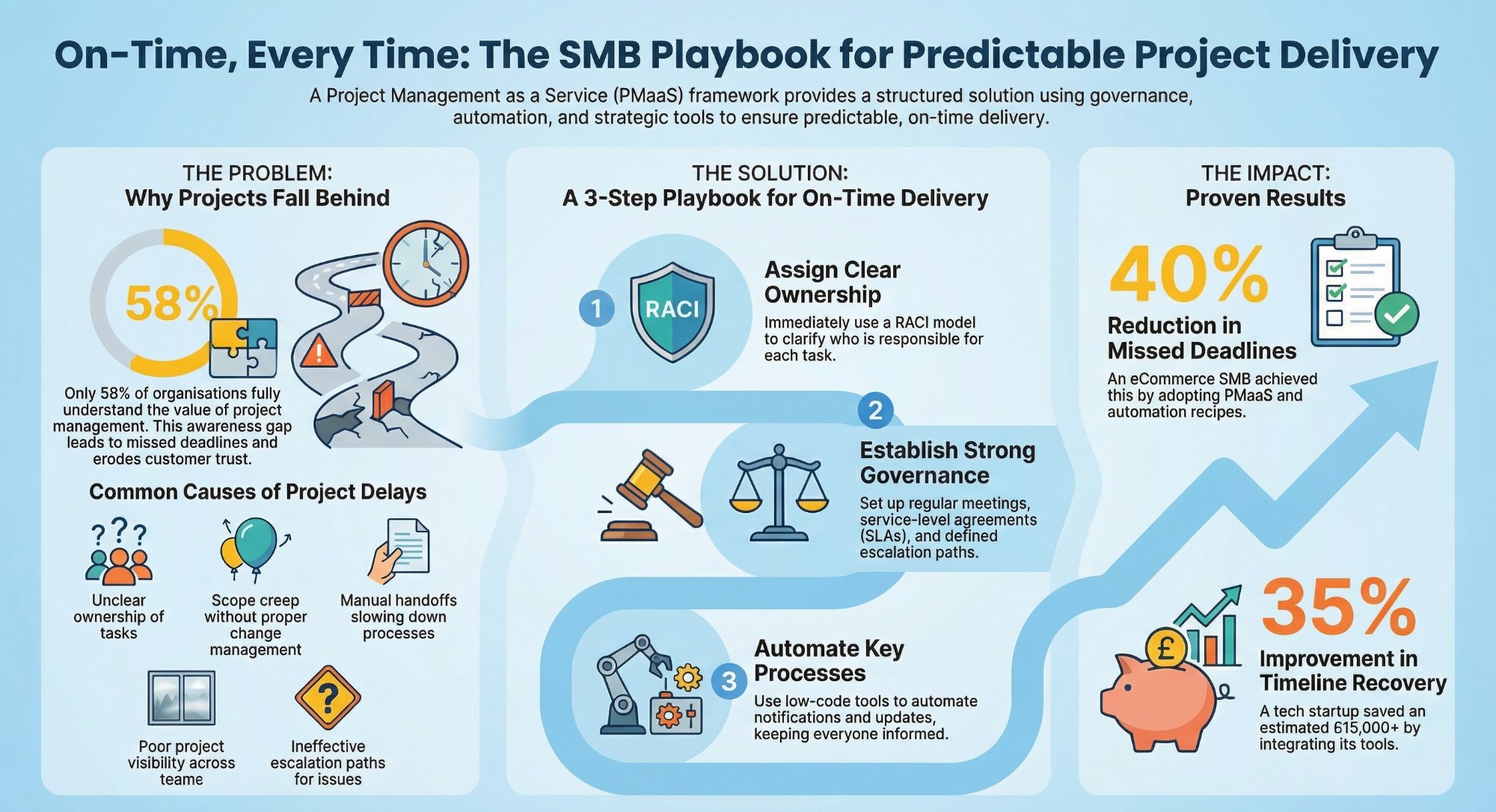
This ties directly to our PMaaS guide on why SMBs miss deadlines.
Mistake 5: Confusing Activity with Progress
Your team is in back-to-back meetings. Tasks are getting checked off. But the project is not moving forward. Busy is not progress. The shift is simple: stop reviewing task counts and start reviewing outcomes. At the start of every project, define what real progress looks like. Set milestones that represent meaningful advancement, not just effort. Review those milestones weekly.
Fix These Mistakes and Scale Without Chaos
These project management mistakes are common. They are also completely fixable. The businesses that scale without chaos are not the ones with the most talented people. They are the ones with the best systems. IV Consulting builds project management systems for SMBs running on ClickUp, Notion, and Make. We design the workflow, configure the workspace, and train your team so everything sticks. Book a free strategy call and let us build it together.
FAQs
What is the most common project management mistake CEOs make?
Buying a tool and treating it as a system. Without documented workflows and clear ownership, even the best tools create chaos.
How do I get visibility into projects without micromanaging?
Build a real-time dashboard in ClickUp or Notion that shows RAG status. Also read our guide on how to track team performance without micromanaging.
Do I need a full-time project manager to fix these problems?
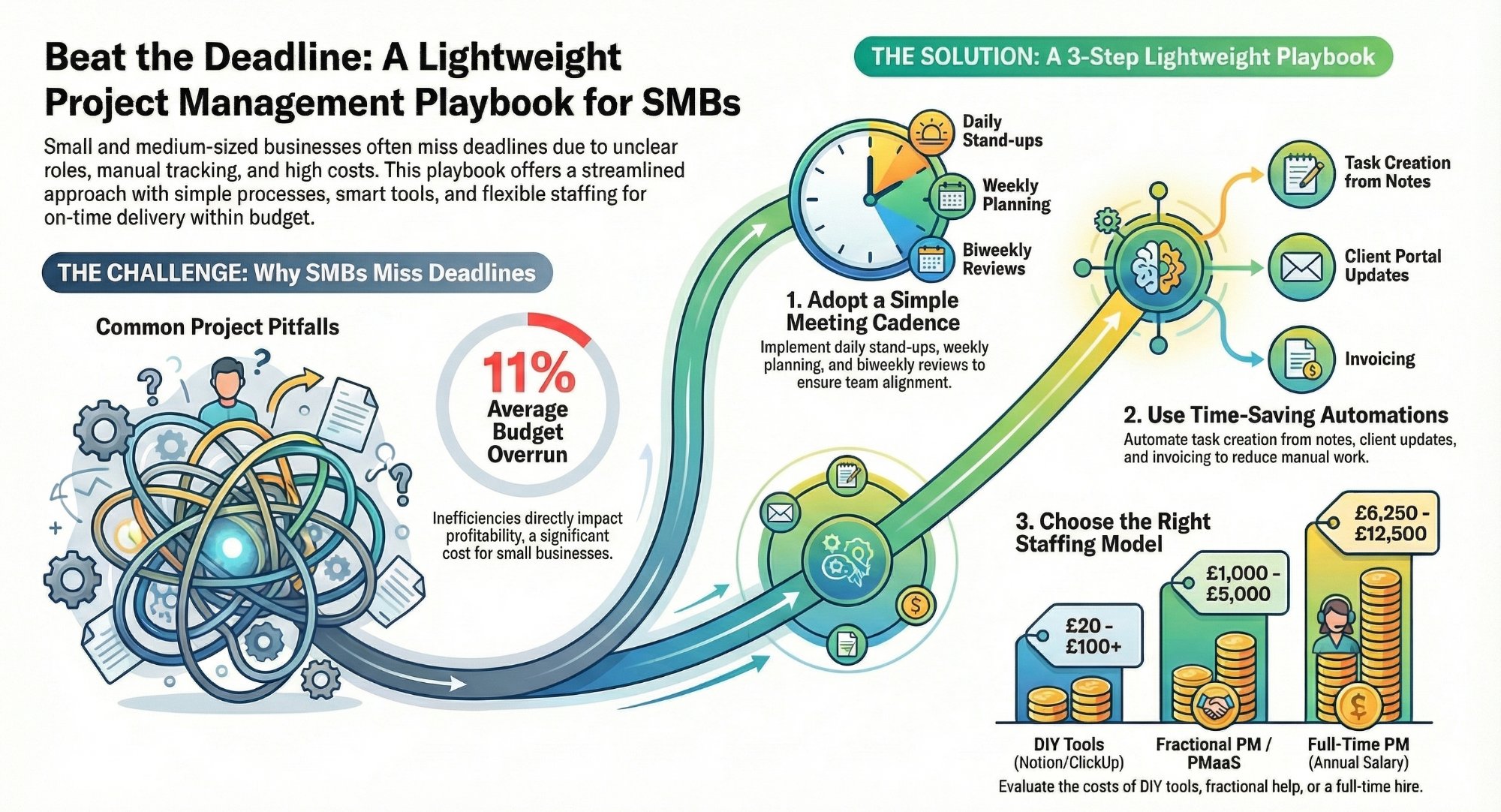
Not necessarily. Read our guide on how small teams can deliver projects on time without a full-time PM.