Why Agile Does Not Always Mean Faster Projects, and What SMBs Should Do About It
Published on:
Oct 31, 2025

Ishan Vats
Introduction
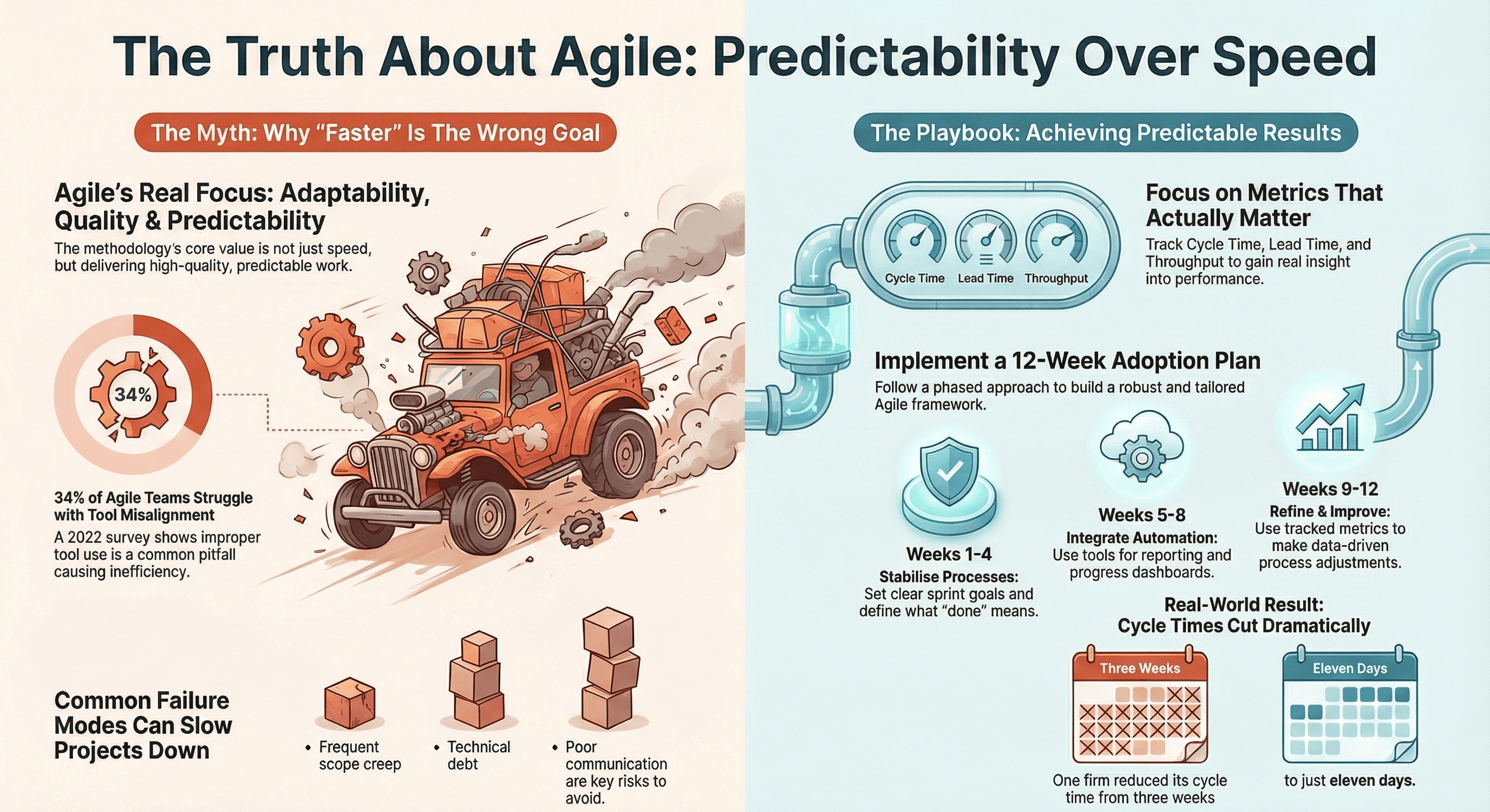
Agile methodology is often misunderstood as a guarantee for faster project delivery. However, the real value of Agile lies in its capacity to enhance adaptability, improve quality, and ensure predictability, rather than merely accelerate velocity. Many business leaders assume that adopting Agile will automatically speed up their projects due to widespread agile misconceptions. In this blog, we'll explore why Agile isn't synonymous with speed and provide a pragmatic playbook, tailored for SMBs, to achieve measurable improvements in their processes.
What Agile Actually Optimizes
At its core, Agile focuses on optimizing adaptability, quality, and project predictability rather than speed alone. Key metrics like velocity, cycle time, and lead time are crucial for understanding Agile's impact. Velocity vs throughput highlights the difference between merely completing tasks and ensuring quality output. Cycle time measures the duration from task initiation to completion, offering insights into efficiency. Lead time spans from task identification to delivery, helping businesses plan better. Focusing on these outcomes aligns Agile with strategic business goals, ensuring projects meet desired timelines and quality standards.
Why Teams Think Agile Equals Speed
Several misconceptions lead teams to equate Agile with speed. First, over-commitment in sprints can create an illusion of accelerated progress, but in reality, it often leads to burnout and poor quality. Second, an ambiguous 'definition of done' can blur completion criteria, undermining actual progress. Lastly, misuse of Agile tools can result in inefficiencies. A 2022 survey indicated that 34% of Agile teams struggled with tool misalignment, highlighting the need for proper training and process definition. Understanding these pitfalls can realign expectations with Agile's true benefits.
How Agile Can Slow Projects - Failure Modes
Agile can inadvertently cause delays due to various failure modes. Frequent scope creep, where requirements repeatedly change, disrupts progress. A simple fix is setting clear acceptance criteria for each sprint. Technical debt accumulation slows development cycles, so regular code reviews can mitigate this. Inadequate team training leads to inefficiencies; invest in continuous learning to maintain skills. Lastly, unclear communication within teams fosters misunderstandings - daily stand-ups can promote clarity and cohesion. Addressing these areas helps maintain Agile's efficiency.
Metrics That Actually Matter
For SMBs, focusing on practical Agile metrics can drive meaningful improvements. Cycle time reveals how long tasks take, while lead time uncovers project bottlenecks. Throughput measures the volume of work completed in a set period, and tracking escaped defects identifies quality issues early. Aim for cycle times under two weeks, lead times that match your delivery commitments, and strive for throughput consistency. Regularly reviewing these metrics can guide early-stage Agile implementations, offering tangible benchmarks for performance gains.
SMB Playbook: 6-12 Week Adoption Plan
Implementing Agile effectively requires a phased approach.
Week 0 involves establishing baseline metrics.
In Weeks 1-4, focus on stabilizing processes, like setting clear sprint goals.
By Weeks 5-8, integrate automation tools for reporting and dashboards to visualize progress.
From Weeks 9-12, refine your processes based on tracked metrics, iterating for continuous improvement.
Each milestone should bring noticeable enhancements in efficiency and predictability, building towards a robust Agile framework tailored to your business.
Tools and Automations That Improve Predictability
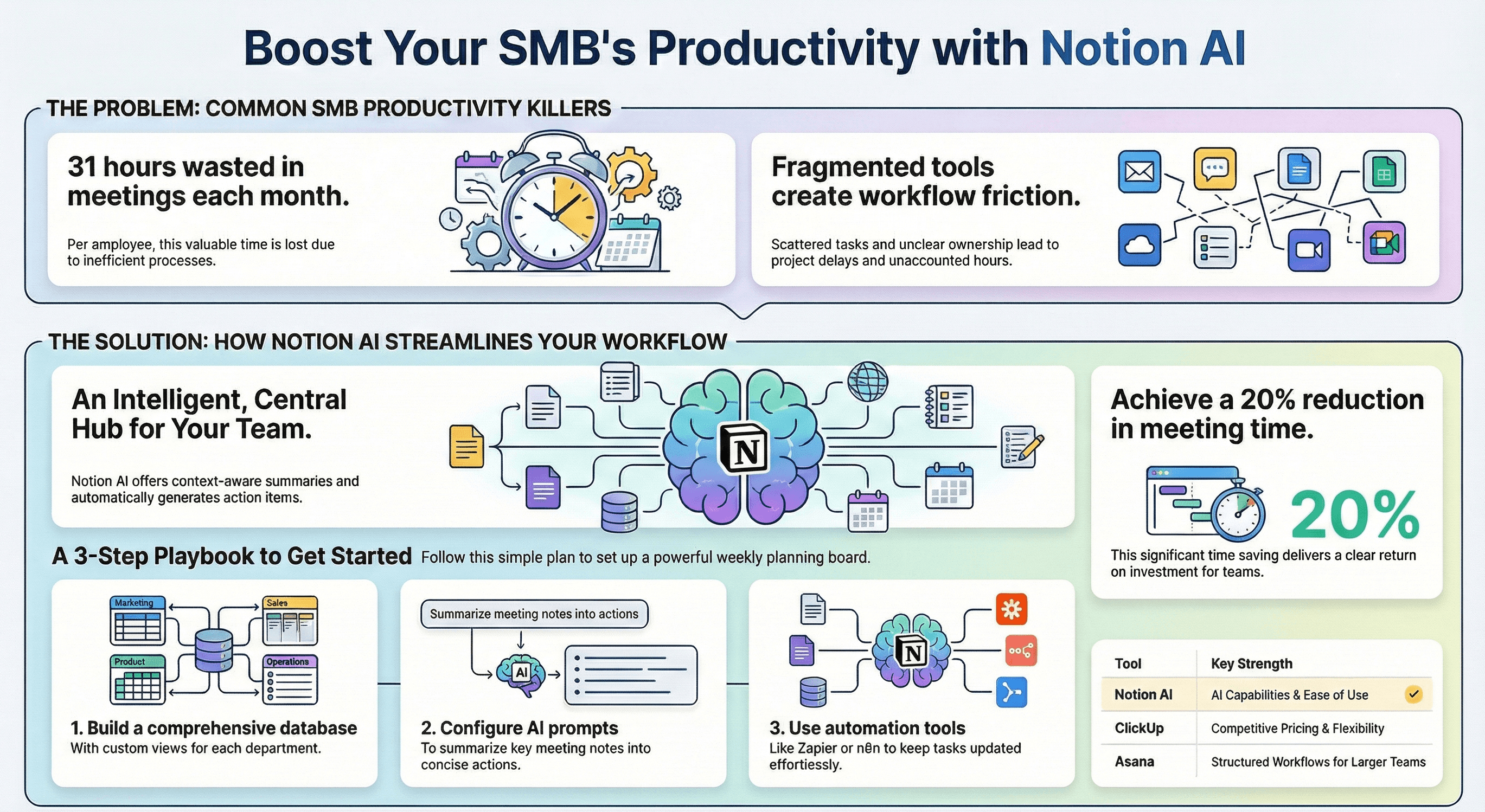
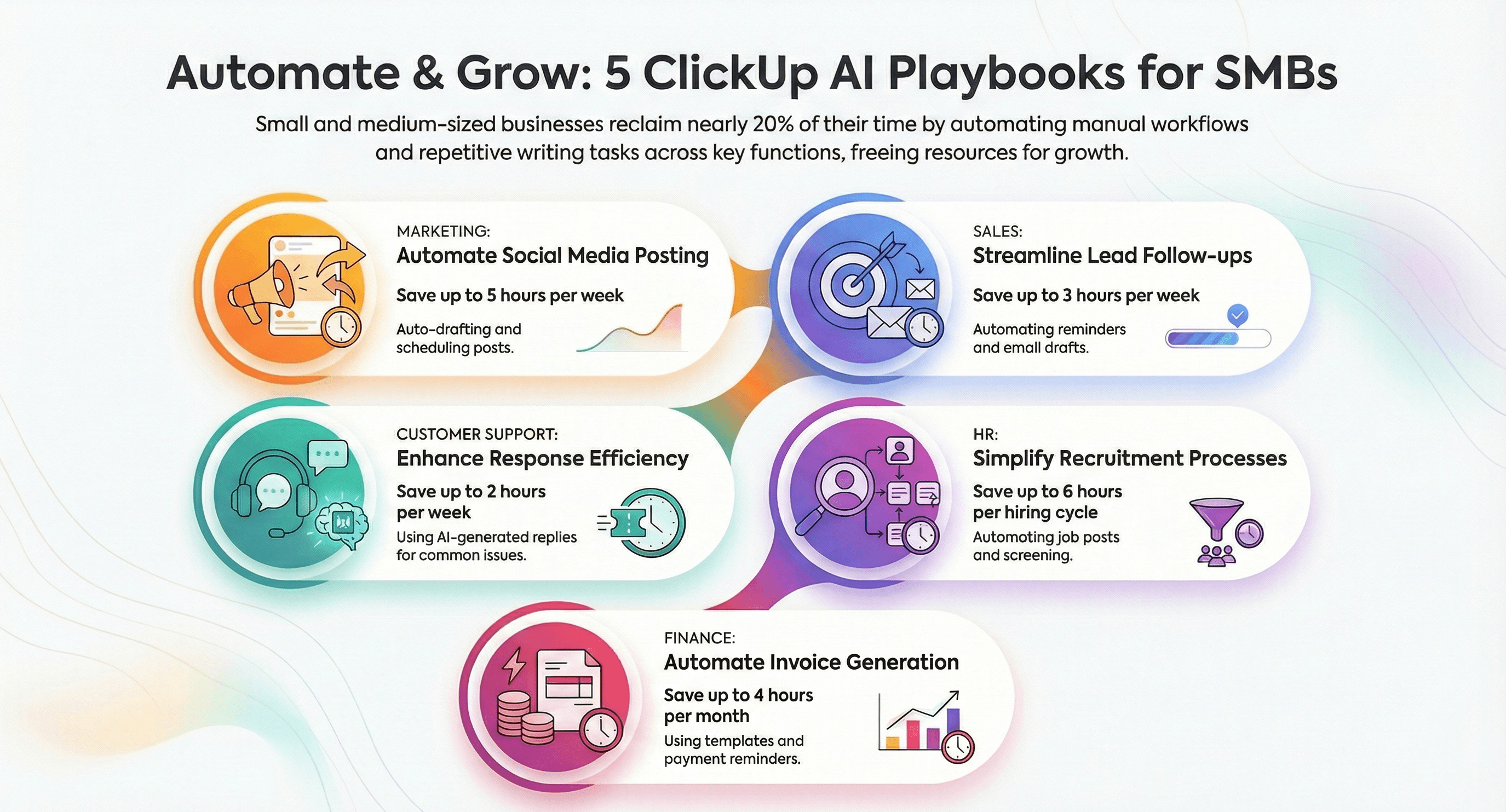
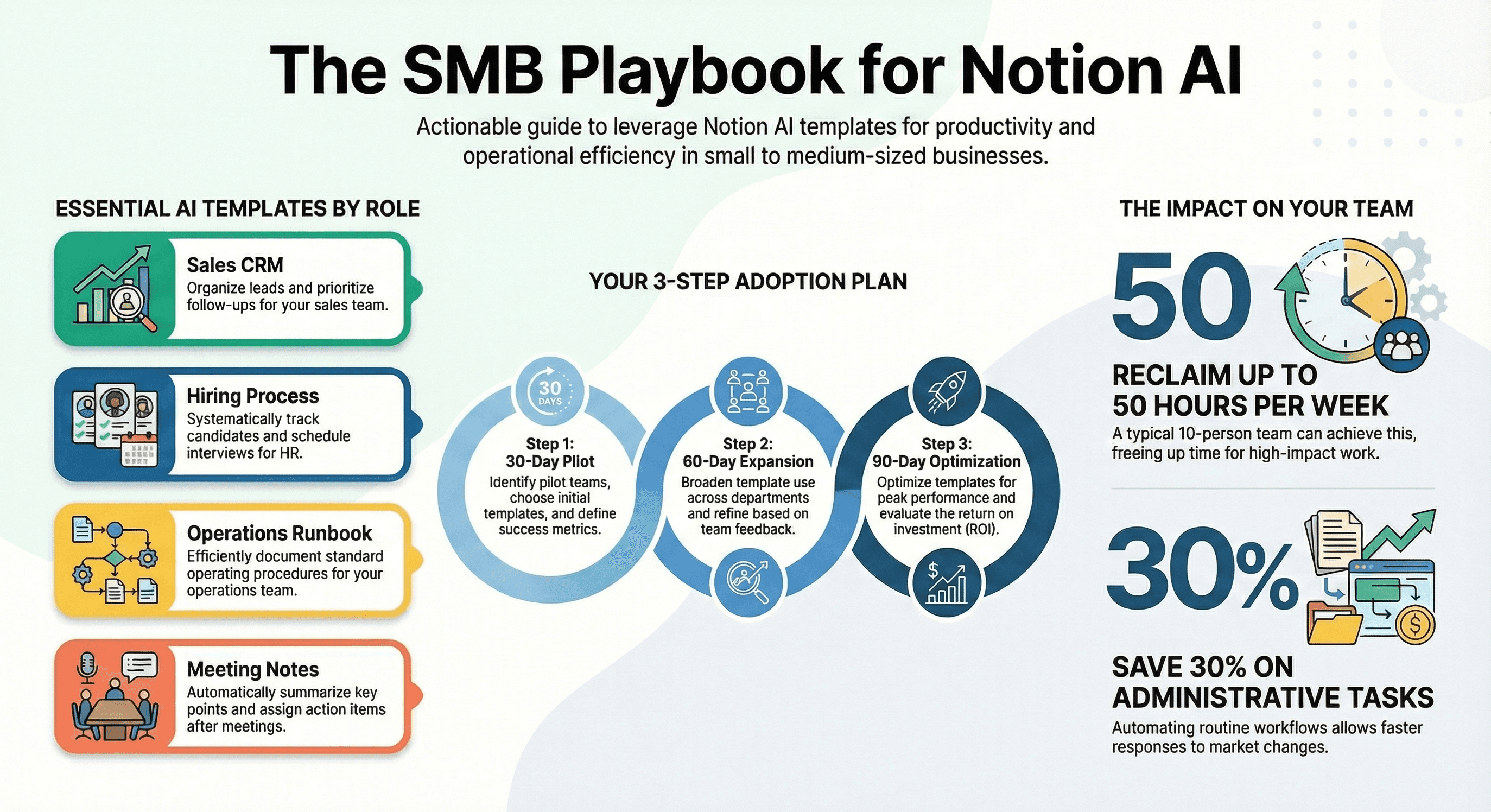
Leveraging the right tools can enhance Agile predictability and efficiency. Use Notion for streamlined sprint documentation and templates, while ClickUp offers automation features to eliminate repetitive tasks. monday boards aid in effective capacity planning, and Close bridges sales-to-delivery workflows seamlessly. Tools like Zapier or n8n enable comprehensive integrations across platforms, reducing workflow disruptions and increasing operational coherence.
Case Examples
Consider a mid-sized tech firm that struggled with prolonged cycle times. By redefining their 'definition of done' and implementing regular code reviews, they reduced cycle times from three weeks to just eleven days, improving overall predictability. Another example is a marketing SMB that suffered from scope creep. By enforcing clear sprint goals and acceptance criteria, their throughput increased by 20% over a quarter, demonstrating Agile's capacity for enhancing efficiency when applied judiciously.
Quick Checklist: Is Agile Right for Your Team?
Do you have projects requiring frequent change adoption?
Is quality improvement a current focus for your business?
Can your team benefit from enhanced collaboration?
Are there issues with current project predictability?
Do your existing processes lack flexibility?
Is there support for Agile training within your organization?
Conclusion
Agile shines in enhancing predictability and quality, contradicting the idea that it inherently speeds up projects. With the right approach and toolset, SMBs can harness Agile for strategic benefits beyond speed. If you want to cut inefficiencies and scale with AI and automation, IV Consulting helps SMBs implement these solutions step by step. Book a consultation today.
FAQs
1. Why doesn't Agile make projects faster?
Agile focuses on flexibility and quality, often leading to longer careful development cycles rather than quick delivery.
2. How long until SMBs see measurable Agile benefits?
Typically, SMBs can see significant improvements within three to six months of consistent Agile implementation.
3. What single metric should I track first for predictability?
Start with cycle time - it provides clear insights into task duration and helps identify bottlenecks.
4. Can automation and integrations make Agile faster?
Yes, automating repetitive tasks and integrating workflows reduces manual errors and enhances process efficiency.
Join
Get notified
Your Weekly Newsletter for Smarter Work and Simpler Systems
Get practical insights on AI, automation, and business optimization - without the jargon.
Join 1,000+ business owners, founders, and managers who use our tips to save time, scale faster, and simplify their workflows every week.